keepitgreen.be
en

Platform for the management and construction of sports and golf courses

Meer golfers in Aalst
Sinds corona steeg het aantal leden van 700 naar 1000 op het golfterrein De Kluizen in Aalst. Mensen gingen niet alleen massaal wandelen maar ook golfen. Hoofdgreenkeeper Joost De Backer geeft ons enthousiast een kijkje in zijn wereld.
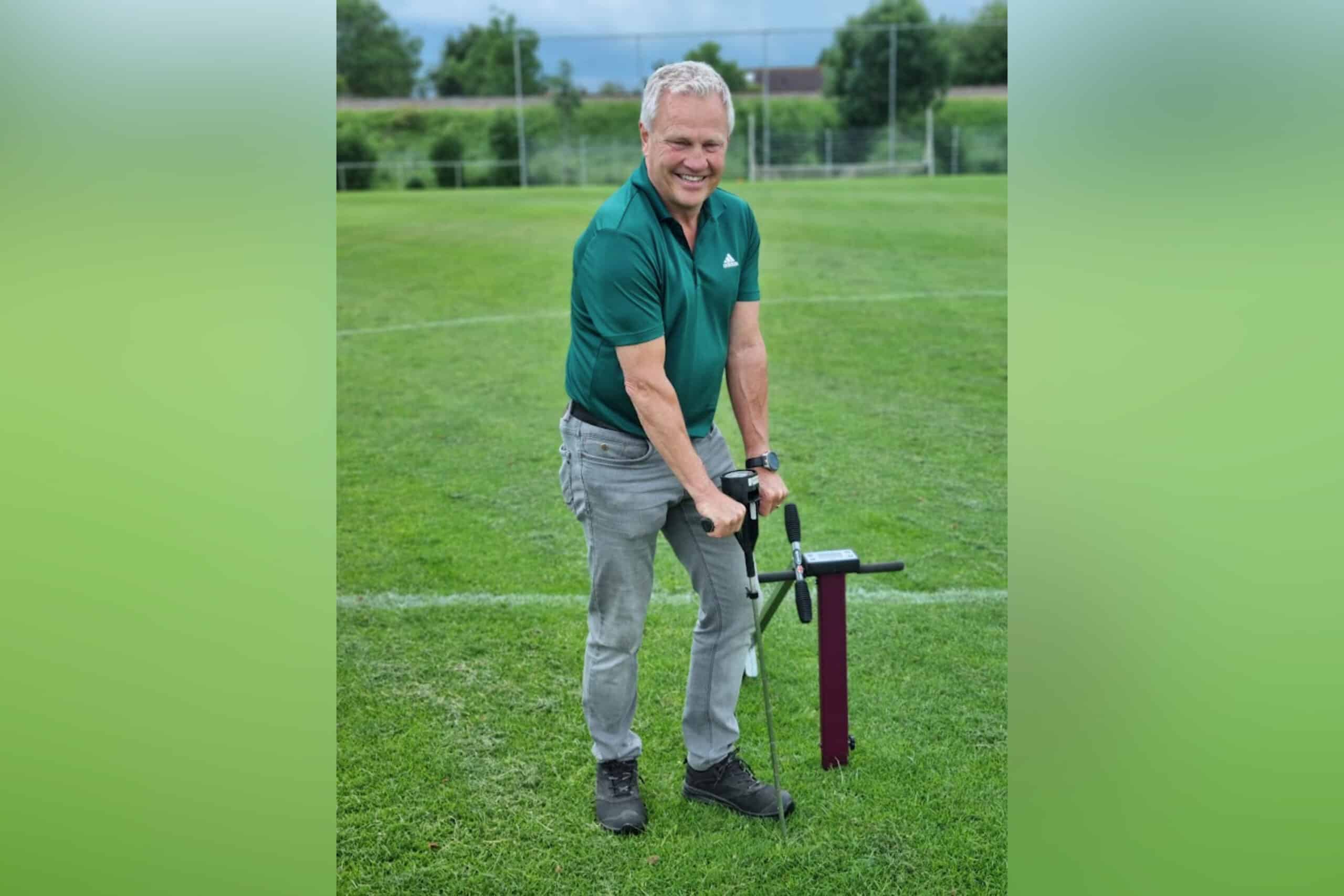
Hoofdgreenkeeper Joost De Backer heeft er al een eerste ochtendverkenning op zitten. “In de zomer beginnen wij om 5.30u om de golfers voor te zijn. Rond 15u of 16u zit onze dagtaak erop.”
De job als greenkeeper is Joost – als fervente ochtend- en buitenmens – op het lijf geschreven. Hij startte als jobstudent op de golfclub tijdens zijn middelbare studies biotechnologie. Daarna volgde hij de richting agro- en biotechnologie optie landbouw. Wat volgde, stond in de sterren geschreven. Toen de gewezen hoofdgreenkeeper zijn ontslag gaf, keek de eigenaar richting Joost. “Zo ben ik na het afstuderen meteen hier begonnen. Intussen zijn we zeven jaar verder”, vertelt
De Backer.
“Het onderhoud van het negenholes golfterrein is vrij intensief. Het totale terrein is zestien hectare groot, waarvan acht hectare waarop gegolfd wordt. Intussen hebben we 1000 leden. De eerste golfers staan al om 6u in de steigers. In de winter is dat met het opkomen van de zon en in de zomer vinden er iedere vrijdagnamiddag, zaterdag en zondag toernooien plaats. In de week zijn de competities voorbehouden voor de clubleden zelf. Zo kan het wel heel druk zijn. Maandag is de dag van de greenkeepers en vinden er geen toernooien plaats”, vertelt De Backer nog.
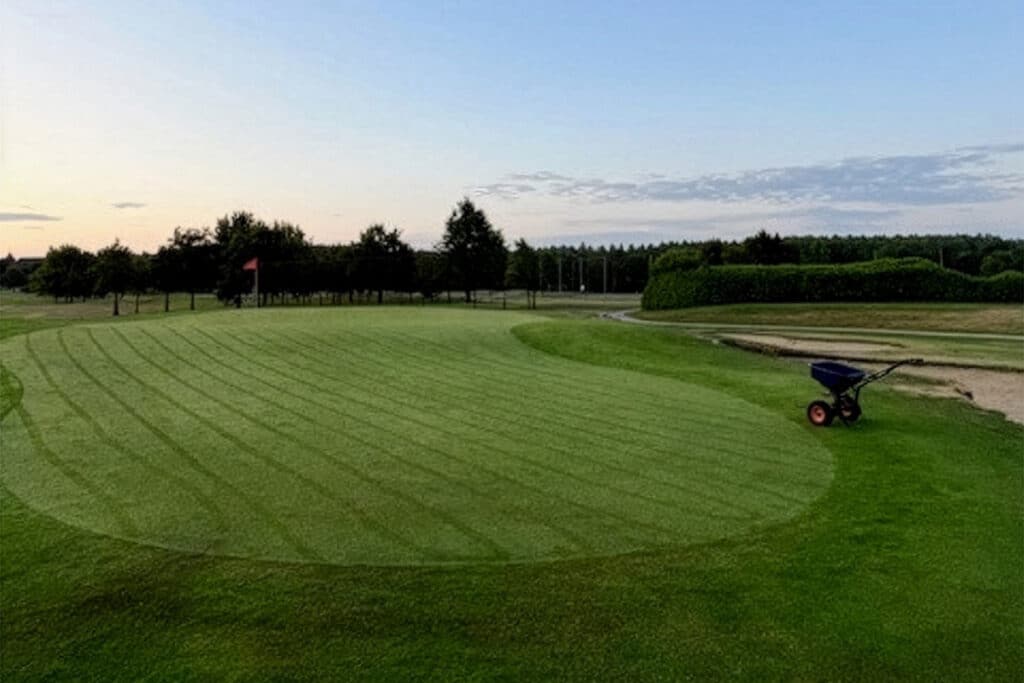
Joost en zijn team zorgen ervoor dat de grasmat er het ganse jaar nagenoeg perfect bijligt. In de zomer worden de greens alle dagen gemaaid tot een hoogte van 4 mm en regelmatig geprikt en bezand. Met een strooimachine wordt een fijn laagje zand over de greens gestrooid om de grond wat te verschralen en mooi egaal te maken. Kleine putjes worden gevuld zodat er opnieuw een vlakke green ontstaat waarop het balletje beter en sneller kan rollen. “In het voorjaar nemen we grondstalen om het bemestingsplan en de hoeveelheden stikstof te bepalen.”
De Backer gaat verder: “Omdat de greens heel kort gehouden worden, hebben we geen last van onkruid. Voor de witte schimmelziekte Fusarium die het gras aantast, is het wel oppassen. Het gebruik van pesticiden is erg beperkt. Wij spuiten enkel met ijzersulfaat: één keer per maand in de zomer en om de twee weken in de winter. Door de natte zomer vorig jaar hebben we minder kunnen bezanden. Zo krijg je een dikkere viltlaag in de greens waardoor we een grotere ziektedruk voelen tegenover andere jaren. Inspelen op droge periodes is niet zo eenvoudig. We werken met een beregeningssysteem op de greens, niet op de fairways. De zandinjectie met een top charger waarbij verticale drainage sleuven worden gemaakt is een vrij nieuwe toepassing.”
“De kort gemaaide fairway (2 cm) is een groot vlak stuk gras, tussen de tee – de plek om af te slaan – en de green. Rond de fairway ligt de rough, een zone waar het gras 5 cm hoog gemaaid is. Het is de bedoeling om in zo min mogelijk slagen vanaf de tee de vlag op de green te bereiken,” legt De Backer uit.
“Wanneer in de zomer het golfterrein er onberispelijk bijligt en de leden complimenten geven, besef ik opnieuw wat een leuke job dit is.”