keepitgreen.be
en

Platform for the management and construction of sports and golf courses
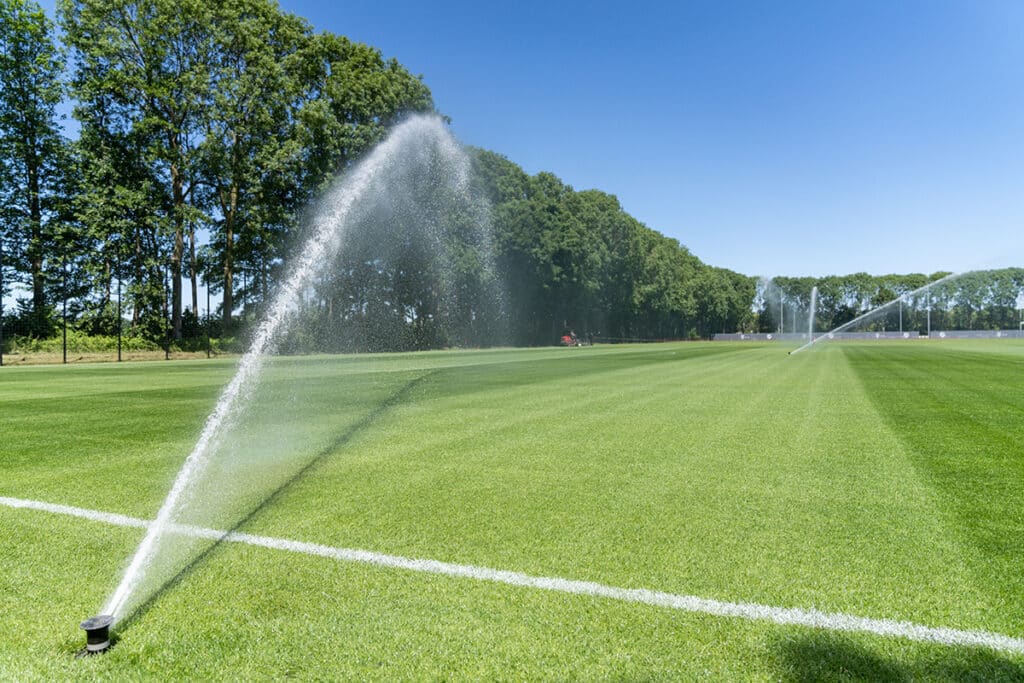
Smart water management makes natural grass pitches more robust and sustainable
Football pitches are increasingly facing extreme weather conditions. Excessive rainfall, prolonged drought or intensive use can quickly put the quality of a pitch under pressure. Technology company DrainTalent aims to address this with a system that actively regulates the moisture balance of sports fields.
“We offer a vacuum drainage system that allows us to actively extract water from a pitch, but also infiltrate water from below,” explains Pim Hermans, Regional Sales Manager Benelux at DrainTalent. “In that way, you essentially gain full control over the soil moisture levels of your pitch.”
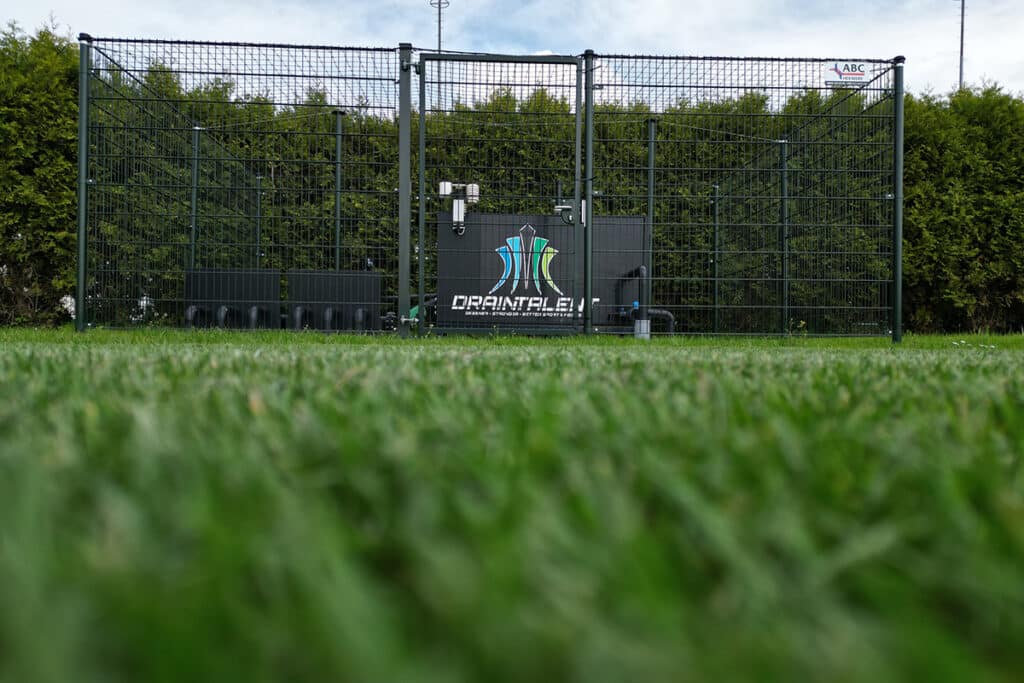
DrainTalent's technology operates beneath the playing surface. Within a closed sand layer, vacuum zones extract water from the soil whenever excess moisture is present. During dry periods, the system can instead move water upwards from below.
The result is a more stable and resilient pitch surface and improved growing conditions for the grass. “By controlling the moisture balance, you stimulate stronger root growth and create a more stable turf,” says Hermans.
Although the system can take over many tasks traditionally performed by irrigation installations, sprinklers will not disappear from stadiums entirely. In certain situations, irrigation from above remains necessary, for example to help fertilisers penetrate the soil.
Data monitoring forms an important part of the system. Sensors in the pitch continuously measure moisture levels at different depths, while a weather station tracks local weather conditions.
“That data is extremely important,” says Hermans. “In the app, you can see exactly how much water has been extracted from the field, how much rain has fallen and how the moisture levels evolve over time.”
The system can even respond automatically to weather forecasts. If heavy rainfall is expected, for instance, the pitch can be partially dried in advance so that water infiltrates more quickly. At the same time, grounds managers retain the option to intervene manually. Especially at professional level, that control remains essential.
DrainTalent has grown significantly in recent years. What started as a small team has expanded, and the company is approaching the market more actively.
For now, the focus lies mainly on professional clubs, where budgets and technical support are often greater. “In the Netherlands, we already have several systems installed and are seeing clear growth,” says Hermans.
International interest is also increasing. Systems have recently been installed in countries including Switzerland, Morocco and Mexico, while discussions are ongoing in several European markets.
Beyond professional clubs, Hermans also sees opportunities for local sports clubs and municipalities. “With one system, you can manage multiple pitches and significantly improve the playability of natural grass,” he explains. “For clubs that prefer not to switch to artificial turf, it can be a very interesting alternative.”
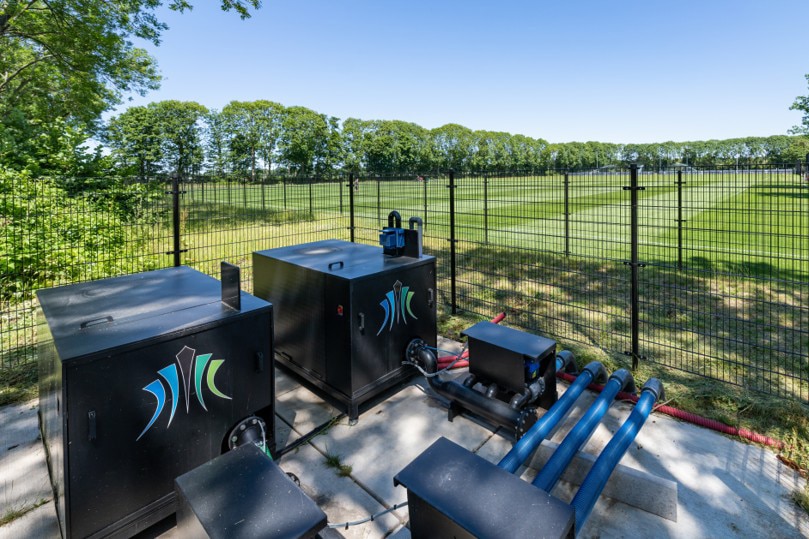
According to Hermans, water management will play an ever greater role in the future of sports pitches. In several countries, restrictions on water use are becoming stricter, making efficient water management essential.
The DrainTalent system can help by buffering and circulating water within the pitch. If a club collects rainwater in a reservoir, for instance, that water can be reused through the system.
“If you work with a buffer, you can keep water circulating continuously,” concludes Pim Hermans. “This further increases the value of the system.”
That the concept goes beyond theory is demonstrated by several projects at professional clubs. At FC Twente's stadium, De Grolsch Veste, the DrainTalent Pro system has been integrated into the pitch. Pitch manager Henry de Weert explains:
“Thanks to active drainage and infiltration, the soil's moisture level can be precisely controlled, allowing the peat to remain stable under a wide range of weather conditions.”
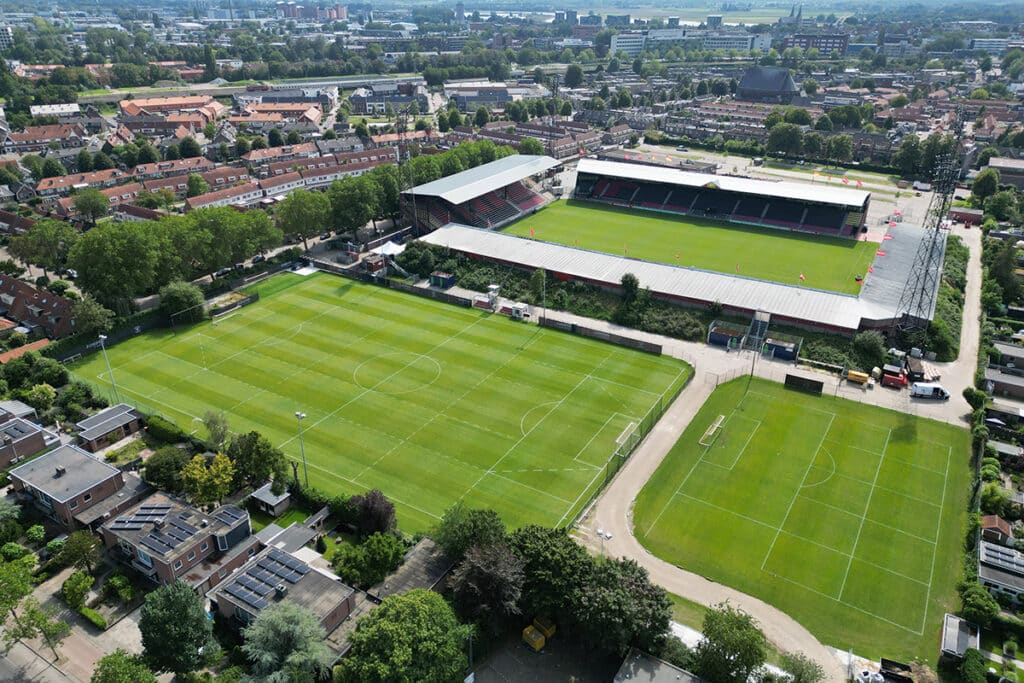
Go Ahead Eagles also opted for the technology during the renovation of both their stadium pitch and training field. The club expects significant improvements in pitch quality and playability, particularly under intensive use.
“We expect a substantial improvement in the quality of our pitches,” says pitch manager Ron Janssen.
Projects such as these show how active water management is gradually becoming an integral part of modern professional pitch maintenance.