keepitgreen.be
en

Platform for the management and construction of sports and golf courses
Construction and maintenance of sports fields
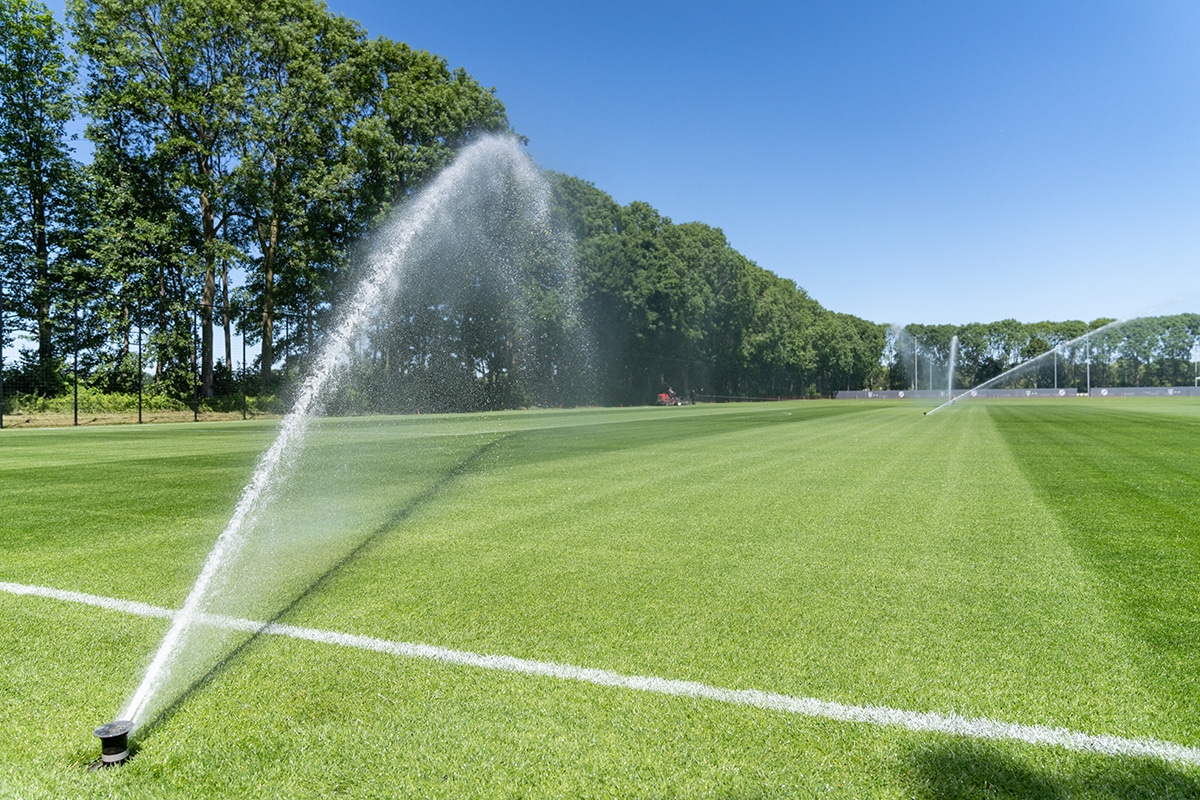
The outdoor sports pitches have looked soggy for the past few weeks. Numerous training sessions and matches were cancelled because the fields were unplayable. It is probably just a foretaste of what climate change has in store for us. At least that is the opinion of Steven Mattelin, site manager at landscape contractor Krinkels. He likes to explain how a good soil structure, water permeability and professional maintenance keep a natural grass pitch in top shape.
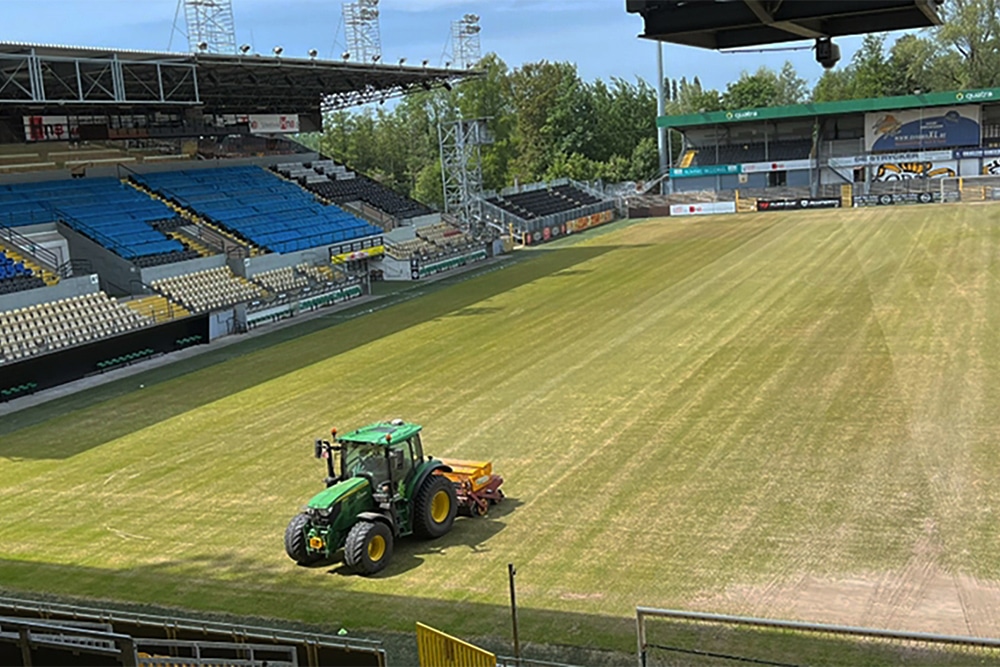
Sports clubs and organisations all over Belgium call on Krinkels to maintain their grass fields. Site manager Steven Mattelin lists a few names as examples: “KV Oostende, SK Deinze, Sport Vlaanderen, the grounds of Ghent, Oostende, Charleroi, Antwerp... We are also often called in to prepare squares for European and international competitions, such as at the Kevin De Bruyne Cup last summer.”
A team of 30 workers is responsible for maintaining some 320 sports fields. “In winter, they are not all constantly working on the squares of course, but in the regeneration season and high season, the team is running at full speed,” Steven Mattelin said.

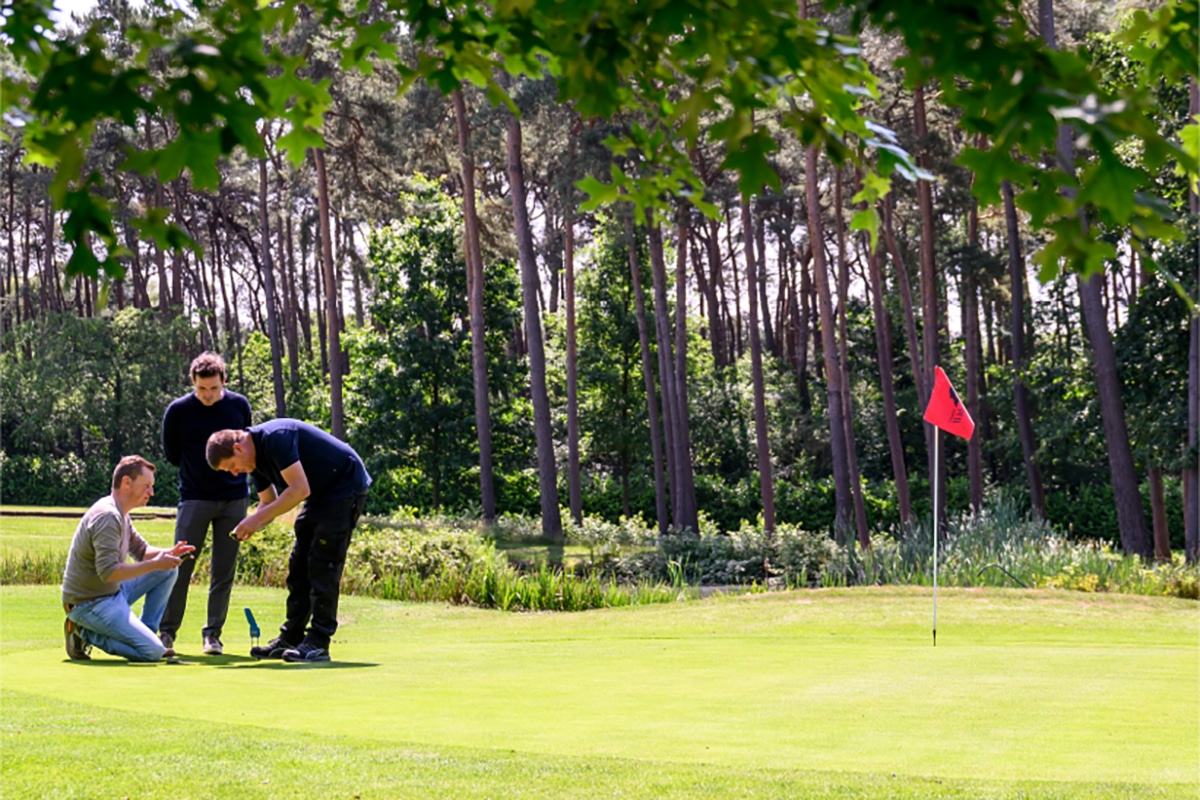
Every year, Krinkels lays about 20 new sports fields. “Prior to the groundwork, it is best to carry out a granular soil survey. The cost of such a survey is negligible. Based on this analysis, the soil can be treated so that the top layer has the ideal composition. With what we learn from it, we can greatly increase the playability of the natural grass pitch,” Mattelin says. “The regret is that the budget for the construction of a natural grass pitch is many times lower than the budget for the construction of an artificial pitch.”
“With a clay content above five per cent, we silt up the top layer. Otherwise, water permeability is insufficient, which is detrimental to playability in wet periods. In heavy soil, the grass also does not root as well, and then there is quick playing damage. This causes unevenness and open spots, where weeds get free rein if not reseeded quickly.”
Krinkels signed the Green Deal Sports Grounds. “Our company is therefore committed to efficient water management on sports grounds. This is not only good for nature,” says Mattelin, “it also promotes the playability of the fields. We ensure that rainwater infiltrates as much as possible locally and is collected for use in dry periods. We do this mainly by softening and creating wadis and ponds around the squares, and with infiltration crates to buffer water.”
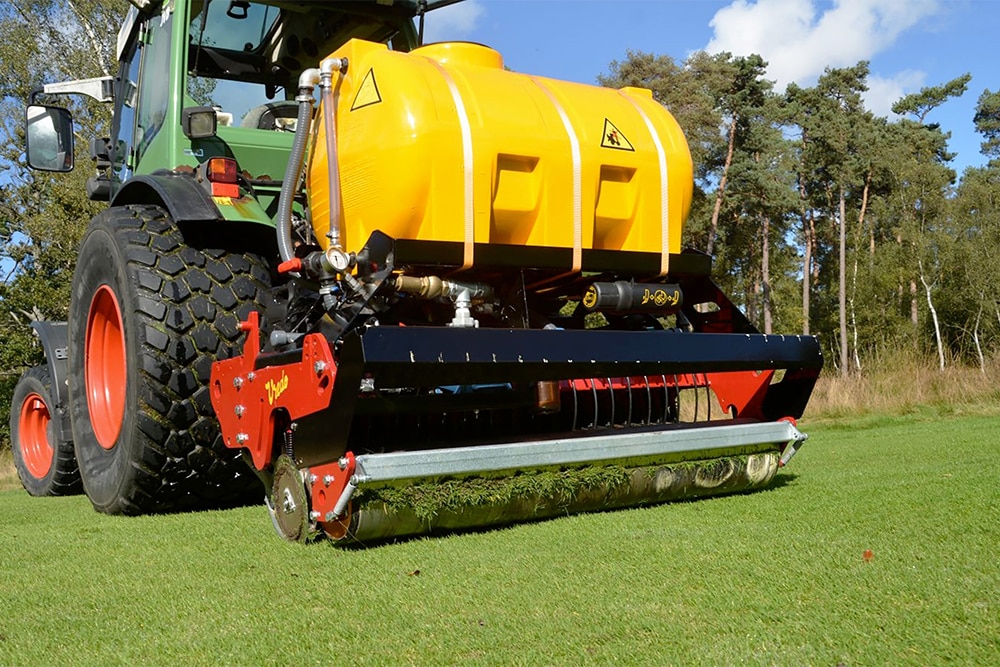
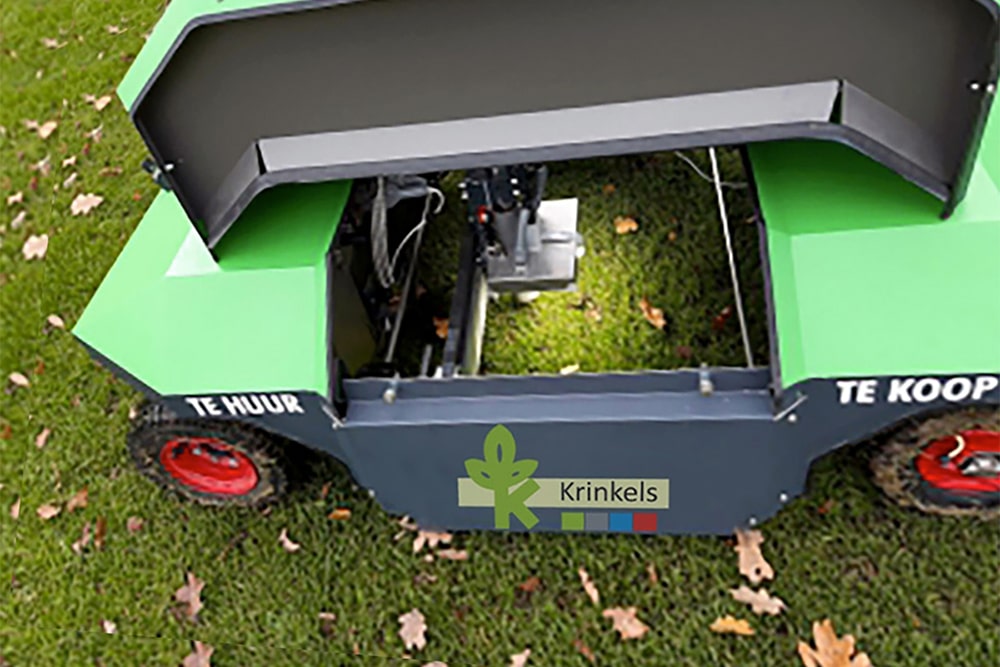
Krinkels also promotes biodiversity around the squares. Pest and weed control is done as ecologically as possible. Steven Mattelin explains: “Only in exceptional, extreme cases do we still use chemicals, and then only in extremely accurately dosed quantities. We control grubs with the Vredo Fluid Feeder. It injects nematodes into the soil, and these parasitise the harmful beetle larvae. To remove weeds, we scarify and weed the turf, among other things. For weeds with pen roots, we deploy our weed robot Violette.”
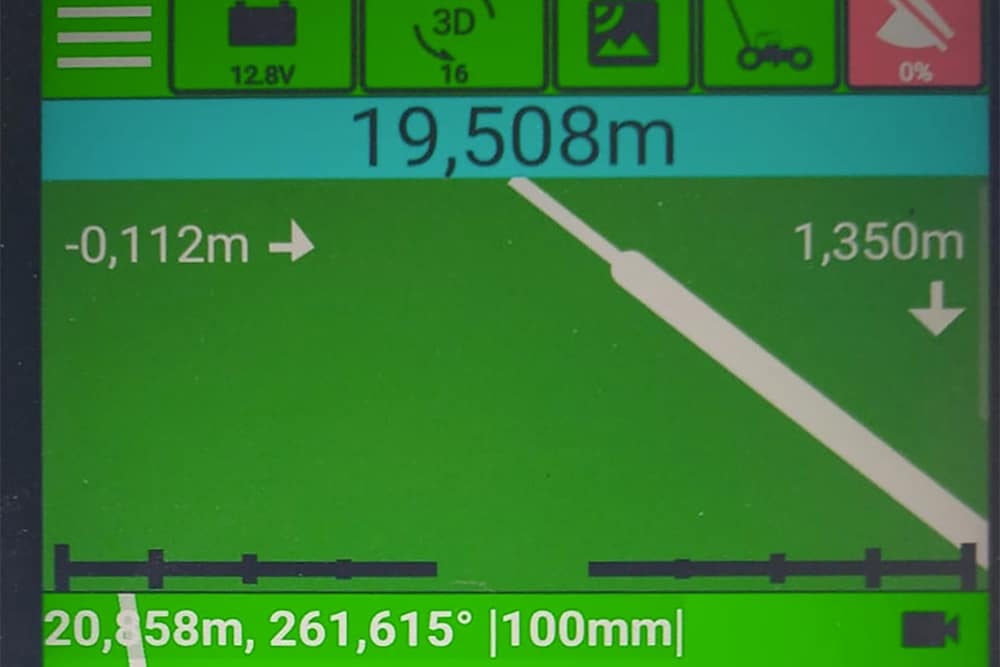
Vredo Fluid and Violette are not the only innovations. “We are also deploying more and more robotic mowers. We rent them out with additional service: replacing blades, monitoring operation remotely, adjusting working hours according to the hours of operation... We also use robotics for line marking. Our new line marking robots work with GPS and laser, so that their operation remains flawless even under large trees and light masts and surrounded by stands,” Mattelin concludes.
Please contact us directly at Krinkels nv.
 Contact us
The ‘K’ of landscape contractor Krinkels has symbolised the design and maintenance of public and private spaces for 50 years. A modern company with the expertise and practical experience of generations. Professionalism, efficiency and commitment in the middle of the landscape.
View Company Profile