keepitgreen.be
en

Platform for the management and construction of sports and golf courses
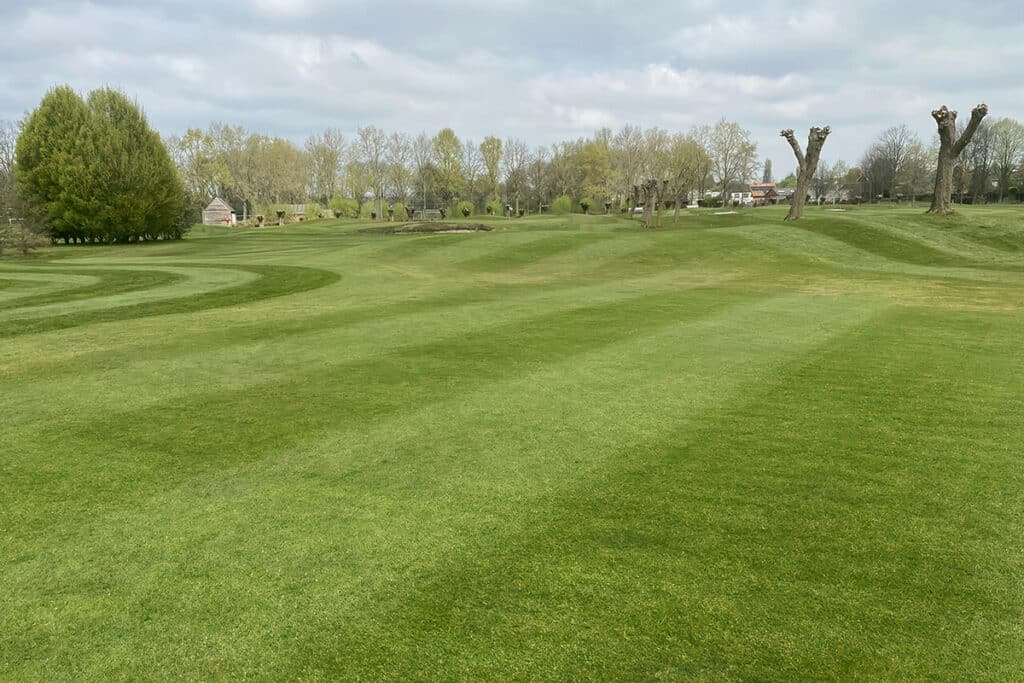
Smart choices for healthy greens
“You can have such a good salesman or a perfectly written fertilisation plan ... without soil analysis, you don't really know anything.” Speaking is Nicolas De Schutter, business manager of NDS Solutions and consultant for numerous golf clubs, sports fields and public green spaces. His mission: to wake up the sector to the importance of measuring, understanding and only then making adjustments.
According to De Schutter, it remains surprising how many decisions in green management are still made on gut feeling. “Every green is different, and so is every golf course. Even on one course, there are big differences in acidity, moisture, salt, compaction or microbiological life. If you ignore that, you are working with the blunt axe.”
What then? “Start measuring. A correct soil analysis gives you a starting point as well as an evolution. You know where you stand, you see how the soil responds to interventions, and you can make much more targeted choices. Less waste, more effect.”
Yet even analysis is not a miracle solution, warns De Schutter. “Some have one sample taken and think: ‘done’. But a one-off sampling is like taking one photo and hoping you understand the whole film. Actually, you have to monitor: at least seasonally, preferably at fixed points and always in the same way. Only then will you gain insight into trends.”
That approach makes all the difference in identifying underlying problems. “Poor growth can come from salt accumulation, poor drainage, low CEC or calcium-magnesium imbalance. Without data, you are left guessing. So measurement is not just for ‘nerds’, it's just professional management.”
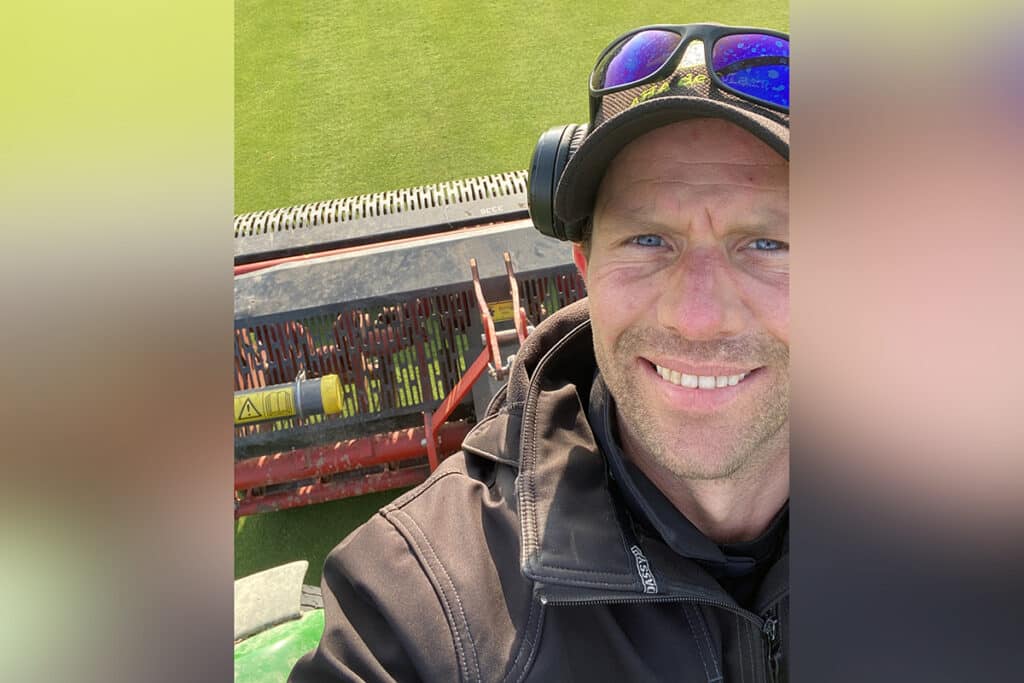
NDS Solutions works exclusively with fertilisation schedules that start from an up-to-date soil scan. “We are brand-independent, so we don't prescribe products because we have to sell them. Everything starts from the needs of the field itself. That also means: sometimes we say not to fertilise. Because over-fertilisation is at least as harmful as a shortage.” And yes, that sometimes leads to difficult conversations. “A customer sometimes expects a ‘package’ or a calendar with standard solutions. But good management is not a straitjacket. It is a process of observation, analysis, adjustment. And as a greenkeeper or groundsman, you have to be willing to step into that.”
De Schutter is not against technology, quite the contrary. “Sensors, satellite images, apps with AI - these are fantastic tools. But there too: use them consciously. Data is only valuable when you understand it and connect it to what you see on the ground.”
His advice: combine classic sampling with new technology, but never lose connection with the site itself. “Walk around. Smell the soil. Feel how wet or dry it is. Talk to your crew. Technology is not a replacement for craftsmanship, but a reinforcement of it.”
Finally, measurement costs money. How do you justify that as a greenkeeper? “By showing how much you avoid it,” says De Schutter adamantly. “Those who fertilise or spray blindly often literally throw money at the ground. A targeted approach means less product, less labour and less damage in the long run. And that is the language every club management does understand.”
Good management starts with understanding. And understanding starts with measuring. “Those who really want to improve their greens must dare to look under the turf,” concludes Nicolas De Schutter. “Because that's where the game really begins.”