keepitgreen.be
en

Platform for the management and construction of sports and golf courses
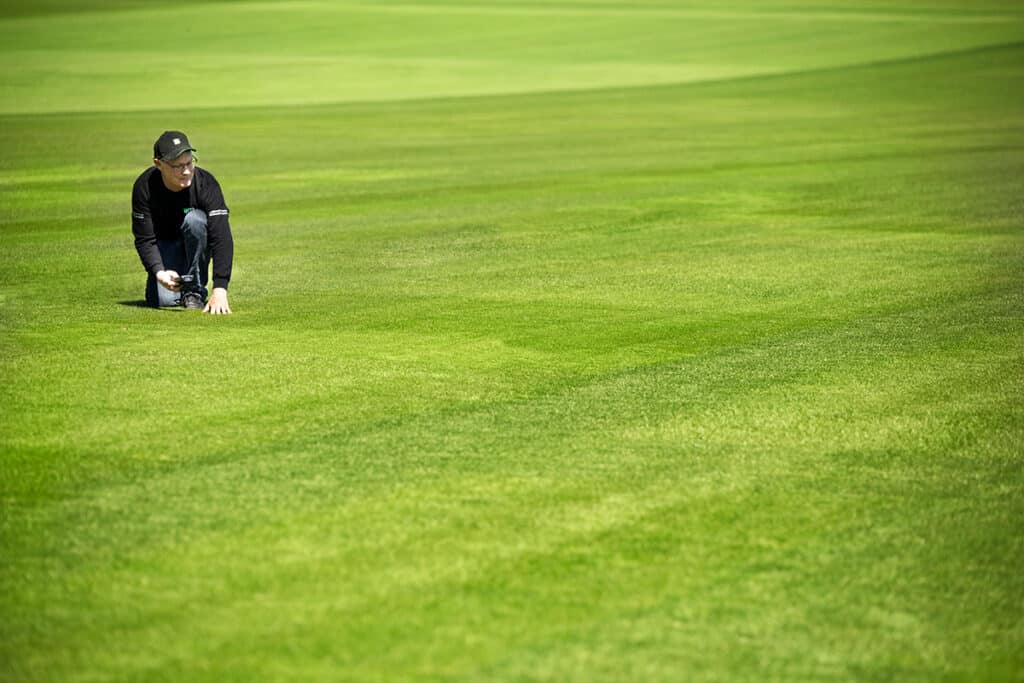
Evolutions in grass diseases require adapted selection and strategy
A turf that glows with health has long since ceased to be self-evident. Because of climate change on the one hand, and the ever-stricter regulations on the use of pesticides and fungicides on the other, greenkeepers are facing more and more challenges. Existing diseases emerge more frequently, while new diseases from other regions or sectors are also advancing. This not only requires adapted mechanical maintenance, but also, and especially, the development and selection of grass varieties with higher disease tolerance.
Every year, grass seed breeder DLF distributes to European greenkeepers and green professionals the so-called ‘disease survey’: an online questionnaire that polls them on the diseases and problems they faced on their turf in the past year. “The survey is an important pillar of our business,” says product development manager Anne Mette Jensen. “It gives us insight into both the current and future challenges of our customers so that we can respond to them in a targeted way in the development of new grass varieties. The more response, the better we can ultimately help users.”
Last year, the ‘disease survey’ was sent out for the fourth time. “Judging from past years, we can already identify a number of trends,” says Jensen. “In general, it is already clear that diseases are becoming more common. We also see that diseases that traditionally mainly occurred on golf courses are now also popping up on football pitches or even in private gardens. In addition, diseases that were typical of southern Europe are increasingly making their way northwards. In English football leagues, for instance, people are increasingly struggling with grey leaf spot or grey leaf spot; in Belgium and the Netherlands, dollar spot is becoming a major challenge for golf clubs.”
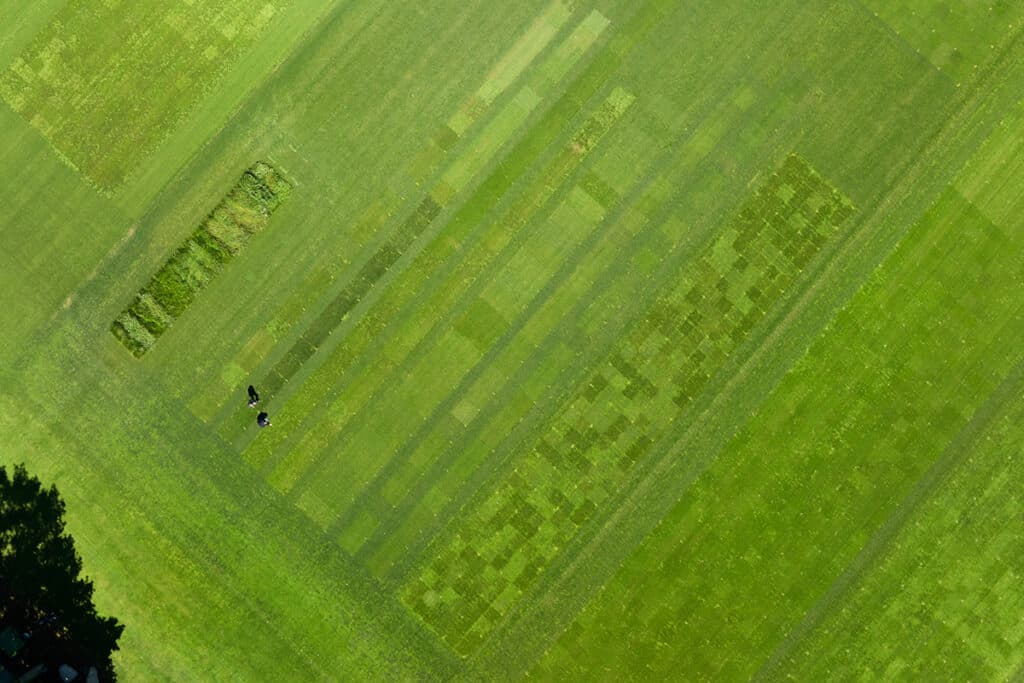
Dollar spot is a foliar fungal disease characterised by small, brown and slightly sunken spots in the turf. At the root is the fungus Scerotinia Homeocarpa, which particularly likes warm and humid weather. “Dollar spot is a complex disease,” Jensen stresses. “It is not a single fungus, but a whole group of related types. In other words, it can be a completely different variant in one place than in another. In our research centre, a lot of attention is therefore paid to building up knowledge about the disease. Only by really understanding the disease can we provide solutions.”
Meanwhile, DLF employs several pathologists who examine the genetic composition of the isolates and map which types occur where. “These insights help us to identify which grasses already have good tolerance and how we can develop even stronger types through breeding.”
One grass variety that shows such high tolerance to dollar spot is Flagstick. “US research shows that this white ostrich grass is extremely tolerant at DNA level to a lot of common isolates,” says Erik Dolstra, recreational grass specialist at DLF. “What's even better is that Flagstick also indirectly contributes to higher disease tolerance. The rapid emergence helps suppress the much more sensitive meadow grass and the grass uses water very efficiently. This drought tolerance is of course an important asset in the context of climate change, but it is also a strategic element in disease control. Because the grass plant retains water so well, you can keep the top layer nice and dry. This in turn ensures that fungi have much less chance of developing. All in all, it means that Flagstick, which incidentally is also characterised by a high salt tolerance, is an excellent choice for a healthy green.”
Please contact us directly at DLF BV.
 Contact us
The best grass for sports, recreation and livestock DLF is the world market leader in grass seeds for sports, recreation and livestock. With a market share of 50% in Europe and 30% worldwide, chances are that the grass you enjoy in your garden was sown with our grass seed. If you enjoy sports then you probably have [...]
View Company Profile