keepitgreen.be
en

Platform for the management and construction of sports and golf courses

Six greenkeeping trends for 2025
At the beginning of the season, it makes sense to take a step back and look at the bigger picture. New technology, stricter regulations and changing climate conditions require a fresh look at maintenance, budget and playing quality. The six trends below show where greenkeepers and decision-makers can create the most impact in 2025.
Battery-powered mowers and transport vehicles now come with powers and operating times that can cope with daily maintenance. Besides lower emissions and lower noise levels, the reduced maintenance requirements play a particular role: no engine oil, no fuel filters, less wear and tear. It is important to organise charge management, though. Consider a centralised charging schedule and sufficient electrical connection points around the shed and track. A step-by-step introduction - first for short-cycle tasks such as greening or tar tilling - helps spread peak load and investment costs.
GPS- and radar-guided robots are rapidly shifting from rough to fairway management. They constantly work within virtual boundaries, applying thousands of small cuts per day, reducing stress on the grass. For the greenkeeper, the work shifts towards supervision, maintenance and route planning. Safety remains crucial: clear no-go zones and a flawlessly configured geofencing system prevent incidents with players or wildlife. Experience shows that starting on less critical surfaces (e.g. semi-rough) provides a safe learning moment for staff and board alike.

Input costs rise, while chemical pressure must fall. Fertilisers with high organic carbon content support soil life and bind nutrients, reducing leaching risk and making turf more resilient. Many courses therefore combine a lighter NPK programme (nitrogen/phosphorus/potassium) with periodic application of soil conditioners or liquid biostimulants. To measure effect, a simple baseline measurement of organic matter content, pH and CEC (cation exchange capacity) is sufficient. A fixed monitoring cycle makes it easier to make timely corrections.
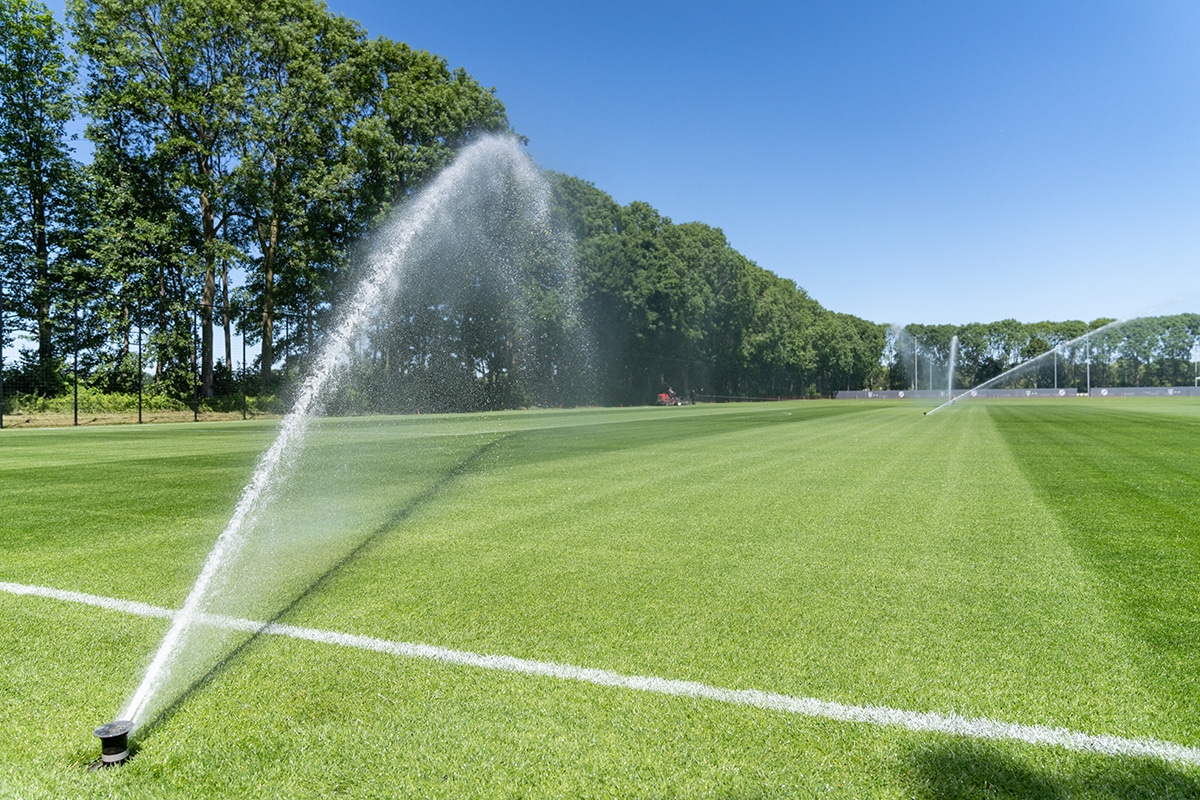
Moisture and temperature sensors, linked to weather forecasts, control sprinkler pumps with increasing precision. Results show water savings of up to a third and a demonstrably healthier root zone due to fewer soil moisture extremes. Investing usually starts with a pilot on the greens: one receiver, several wireless probes and a link to the existing control software. If the data become reliable, the hardware can be extended to tees and fairways. Extra profit lies in combining it with pressure-controlled pumps and variable nozzle technology.
Due to an ageing population and competition from other sectors, the number of available greenkeepers continues to decline. Digitalisation provides a foothold: job and machine planning software makes work stocks transparent, links hours to costs and helps set priorities. In addition, the focus is shifting from pure execution to skills such as data interpretation, maintenance of electric drivelines and programming of autonomous units. Clubs that invest in their own training programmes - in collaboration with local training centres - are found to keep staff turnover the lowest.
Licences, subsidies and member expectations place increasing emphasis on measurable ecological performance. Golf courses are therefore committed to flowery rough strips, minimal pesticide inputs and water buffer zones. Digital habitat maps and periodic biodiversity counts form the basis for reporting in Environmental, Social & Governance (ESG) reports. Practical benefit: visible eco-management strengthens reputation and can generate new partnerships, for example with nature organisations or local authorities. It pays to choose one or two clear KPIs - such as percentage pesticide reduction or number of species values - and communicate them consistently.
Electrification, automation, soil improvement, precision water, staff development and biodiversity together form a framework for future-proof course management. By starting one pilot project at a time and making results measurable, a club can make targeted investments and scale up step by step. This keeps playing quality high and the board prepared for tomorrow's challenges.