keepitgreen.be
en

Platform for the management and construction of sports and golf courses
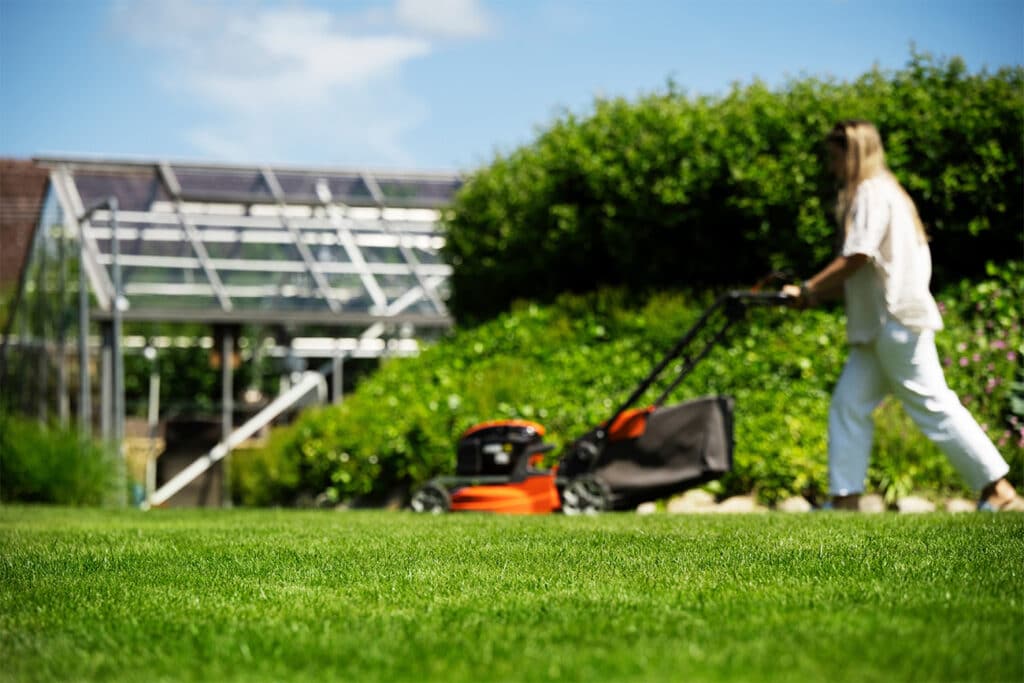
It goes without saying that grass is having a hard time today. Everyone remembers the yellowed and scorched lawn edges and lawns of past summers. Because additional maintenance is a lot of work, extra watering is often not an option and the climate change knob cannot be flipped just like that, DLF has mainly looked for a solution at the source over the past decades. Various DLF Masterline grass seed mixtures therefore contain the latest generation of 4turf® ryegrasses.
“We have been breeding our tetraploid ryegrass 4turf® for decades,” says Thomas van Tetering, DLF product & marketing manager for Benelux. “This has twice as many chromosomes as the traditional diploid ryegrass and can therefore count on a number of important advantages. On the other hand, however, for a long time the grass was less fine and therefore less aesthetic. Today, by continuing to improve, we have fortunately overcome this shortcoming, with the result that this powerhouse is now a standard part of many Masterline grass seed mixtures for sports, parks and lawns.”

In a situation where the climate is becoming increasingly extreme even in the traditionally temperate Low Countries, it is important that the grass also adapts to it.
“The tetraploid ryegrass combines two very important advantages in this respect,” Van Tetering says. “First, the tetraploid seeds contain more energy reserves than the diploid ones and the grass germinates at temperatures as low as 4°C. That is much earlier than other grasses and it means not only that you can extend the sowing season in two directions, but also, for example, that winter performance improves and the grass can recover faster.”
“Secondly, partly because of this rapid germination, tetraploid ryegrass can count on better rooting and thus a deeper root structure. Thus, it can naturally store more water and its drought tolerance increases. Moreover, the deep root structure enables the plants to make better use of minerals in the soil, reducing the use of fertilisers. And that in turn saves in both environmental impact and maintenance costs.”
Van Tetering describes the tetraploid English ryegrass mainly as “a plant that can take care of itself”. Not only against extreme weather conditions, but also against diseases and treading, for example, the plant is particularly resistant.
“In terms of fertilisation and crop protection, less and less is permitted, so high disease resistance is also becoming increasingly important. In addition, 4turf® has an exceptional recovery capacity. As long as the damage to the turf is limited - for example by children playing or a pet rooting in the grass for a while - it will repair itself; larger problems can then be quickly solved again with a recovery mixture of 100% 4turf®.”
In other words, because tetraploid ryegrass remains greener and healthier even in difficult conditions, the pressure of maintenance is eased. “Incidentally, this also applies in coastal areas or other regions where salinisation is a problem. In fact, research shows that 4turf® is also more resistant to salinisation in groundwater and therefore stays green longer.”
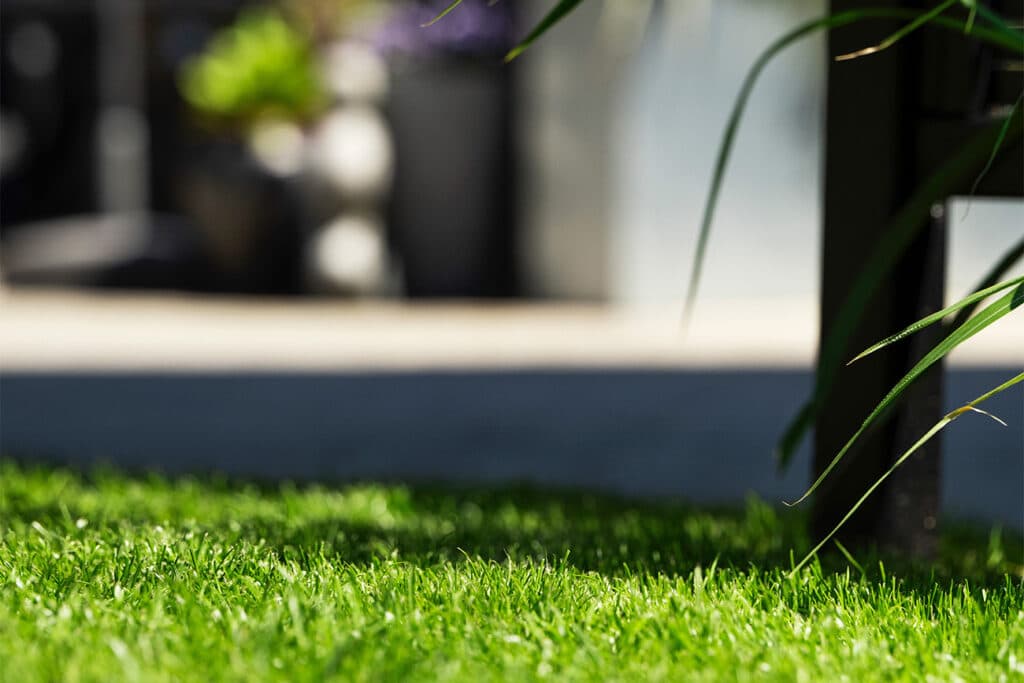
To verify the performance of 4turf® in all possible conditions, the grass variety was tested by DLF in Scandinavia and France, among others. However, after independent research by Wageningen University, the tetraploid English ryegrass was also included in the Dutch Grass Guide last year, in which it was immediately able to secure a podium place. “How wonderful that we not only succeeded in developing a new grass species, but that it was also included in the ‘bible’ of grass species as well as achieving an excellent score,” Van Tetering says with appropriate pride.
Because healthy turf is never a ‘onemanshow’, 4turf® is primarily used in various Masterline grass seed mixtures. “While there is a recovery mixture with 100% tetraploid ryegrass, for establishing and overseeding both public domains and private lawns, our RecreaMaster grass seed mixture is the main one to use. This combines diploid and tetraploid English ryegrass, as well as red fescue and field meadowgrass for reliable and versatile use.”