keepitgreen.be
en

Platform for the management and construction of sports and golf courses
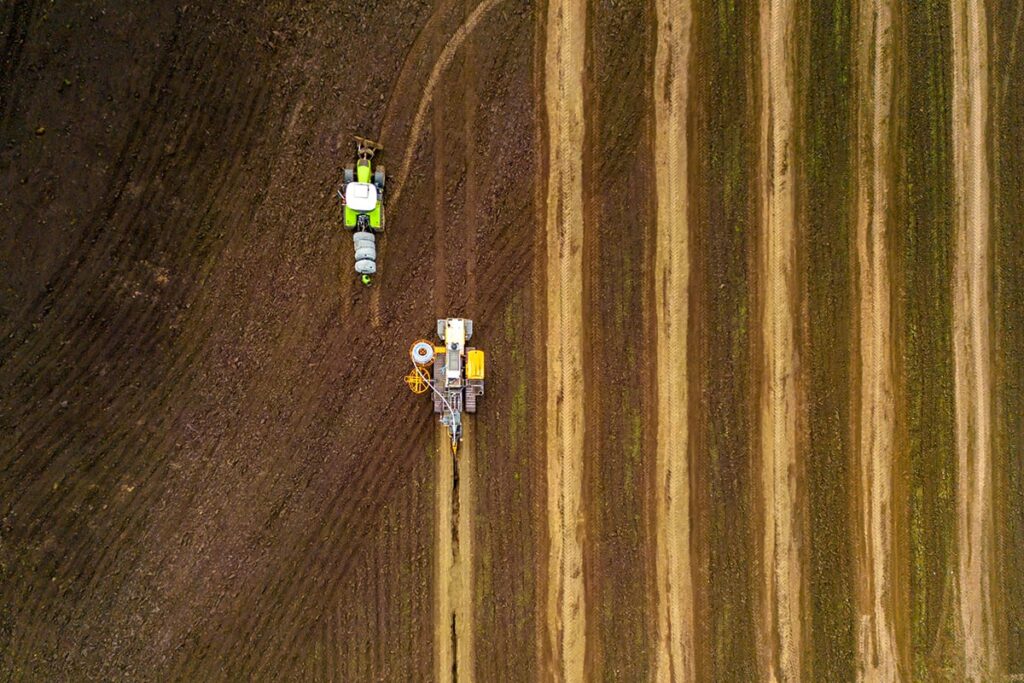
Greenkeepers and golf course operators have long been watching the effects of climate change with suspicion. Whereas in previous years the focus was mainly on periods of prolonged drought, 2024 unexpectedly shifted the focus to the other end of the spectrum: flooding. Thus, increased interest in drainage came immediately from the golf world.
“This can provide a solution to both flooding and water shortages,” stresses Jan De Roye, infra manager at contracting firm De Ceuster.
Last year was exceptionally wet. So wet that golfers occasionally seemed to have to plough through swampy soil and several golf clubs were forced to temporarily close their courses. Jan: “In the past, there was little need for drainage on golf courses. So it makes sense that it was not routinely invested in. This year, however, it became painfully clear that times are changing and it does get far too wet on a lot of courses. Drainage is then a smart move.”
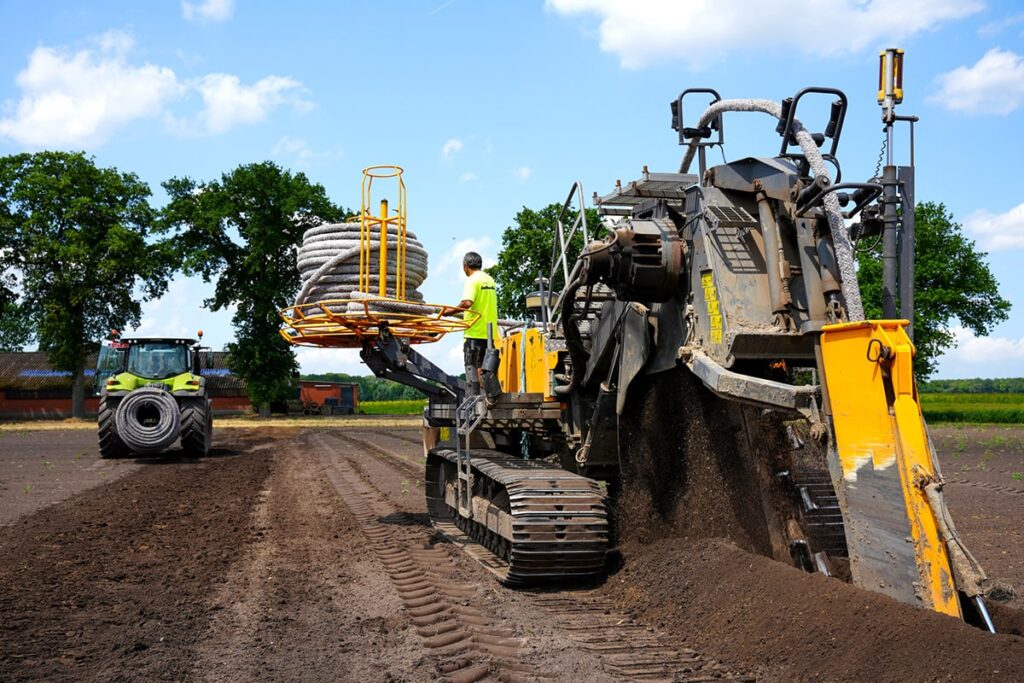
Drainage does not mean just draining, Jan immediately clarifies. “The time when we simply let excess water drain directly into watercourses is over. Level-controlled drainage, where the manager can regulate the groundwater level via a controlled water buffer himself, is the new norm.
This means that water can be retained when it is needed, and only drained when there is a real surplus. In addition, on golf courses we make as much use as possible of the water basins already present, such as ponds and other water features. Only when these are filled are excess water really drained away. Thus, drainage is not only used to prevent flooding, but at the same time to build up reserves for periods of drought. That is a clear win-win.”
In recent months, De Ceuster has, among other things, realised a new driving range, including drainage, at Golfclub Kampenhout and six existing holes at Cleydael Golf & Country Club in Aartselaar were fitted with drainage. Soon, the contracting firm will also install drainage on several holes at Royal Keerbergen Golf Club. “Such a project always starts with a thorough survey of the terrain. These days, we do that with drones and in 3D. Especially on golf courses, which not only cover a lot of area but also have a lot of variations in relief, this is an extremely efficient and accurate method.
We draw up a detailed drainage plan and an additional on-site check ensures that the works are also practically and logistically feasible. Once the lines and heights have been marked out on the site using GPS and laser, the real work starts: we use a chain digger to dig trenches, lay and connect the pipes, and fill everything with sand and finish off neatly. A few weeks later, there is basically nothing left to see on the site.”
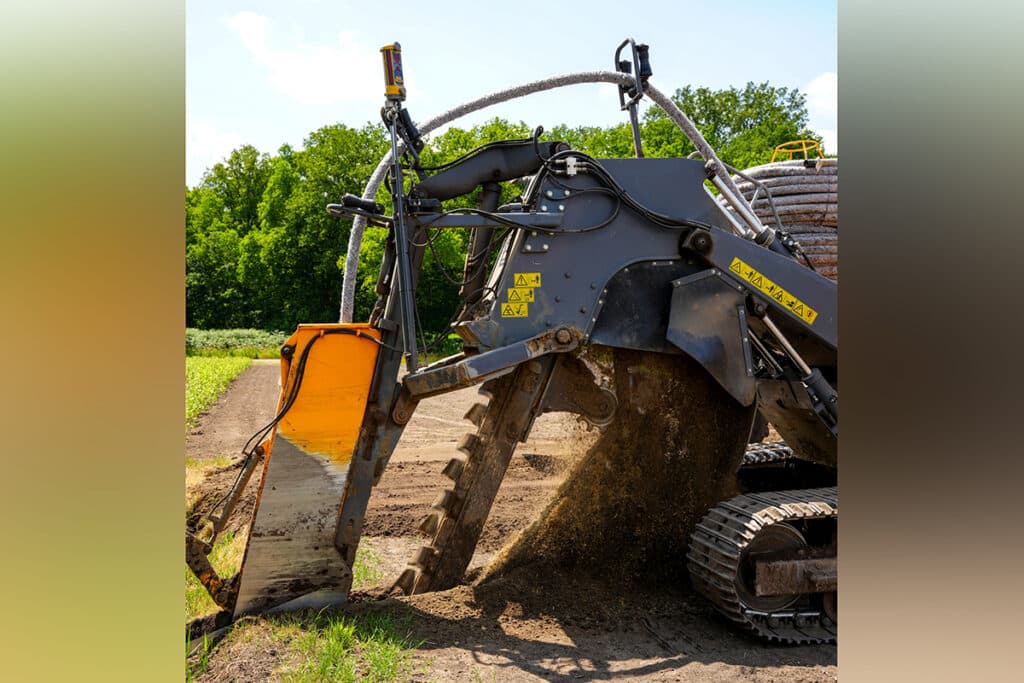
Since the takeover of drainage company Christiaenen- Van Looveren in January 2023, all drainage works by De Ceuster have been done in-house. “Historically, we already had a long-term cooperation with Louis Christiaenen and his team, who worked for us as subcontractors. When Louis and his wife Yvonne wanted to pass on the torch, it was only logical for us to take over the activities and for their employees to join us. Thus, on top of our own expertise in all kinds of earthworks, we employ people who have been working exclusively on drainage for 25 to 30 years. They know very well how to tackle a project and help complete our services for sports clubs, as well as for agriculture and horticulture. As a contracting company, we can now provide the entire process: from advice to drainage, construction and maintenance.”
Please contact us directly at De Ceuster NV.
 Contact us
De Ceuster, three generations of love for the trade. De Ceuster realises total solutions for Horti, Sport and Infra. Customers can count on more than 50 years of experience and a strong team of professionals. We are a truly Flemish, but also proudly Belgian company with a no-nonsense mentality. A legacy of Herman De Ceuster, [...]
View Company Profile