keepitgreen.be
en

Platform for the management and construction of sports and golf courses
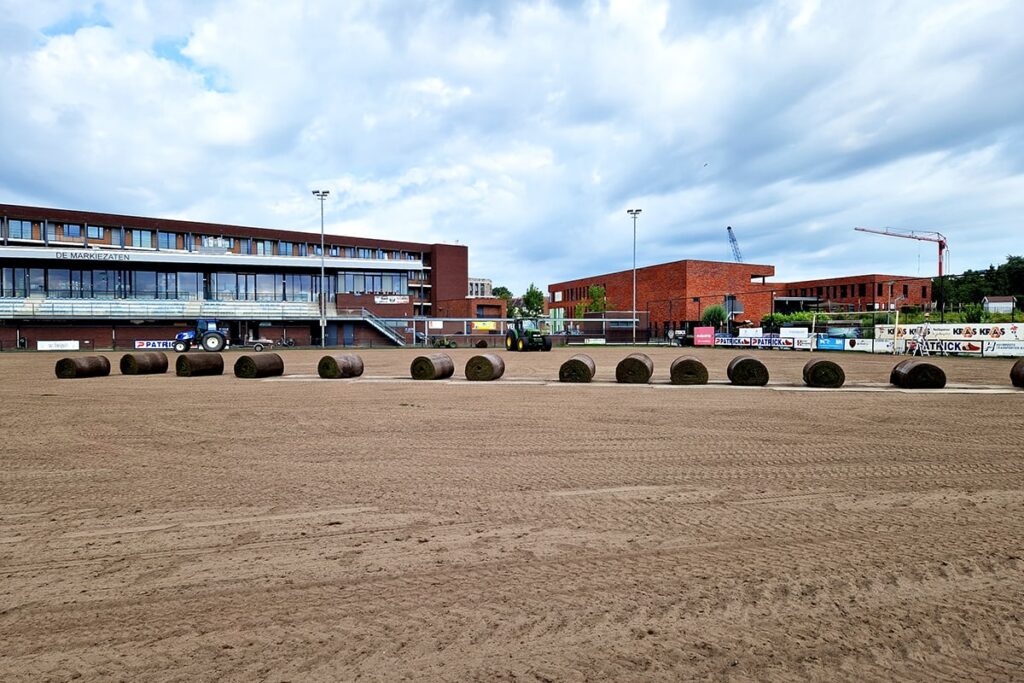
Since last summer, Beerschot - in full Royal Beerschot Football Club Antwerp - has once again been playing in the highest division of Belgian football. A position that calls for pitches in top condition, and not only in the main stadium. The management of the football fields was recently handed over to Krinkels' sports department.
Krinkels was approached by Beerschot in September to put and keep the team's natural grass pitches on point. Especially the practice pitches for the first team, at the youth complex in Wilrijk, needed to be raised to a higher level in the short term. “At that point, it was already too late to start working with classical methods,” says Steven Mattelin, sports expert at Krinkels. “Therefore, the decision was made to re-sod the entire pitch.”
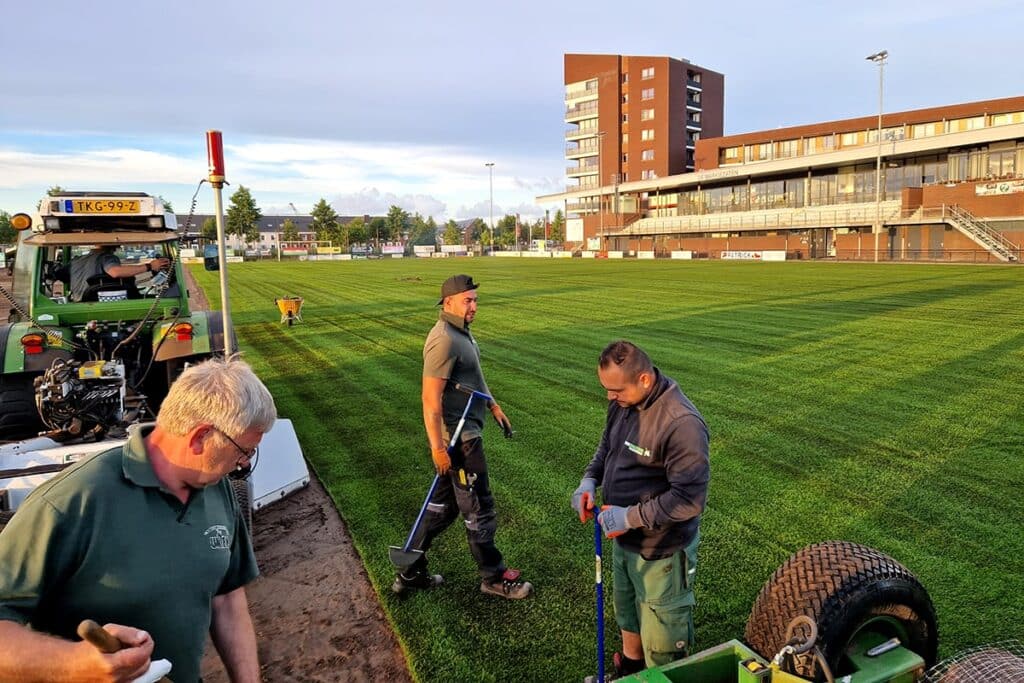
For the re-turfing, Krinkels opted for a thick, vigorous turf consisting mainly of field oatmeal. This is according to the Grass2play concept that has blown over from the Netherlands. It means that fields are no longer sown, but laid directly with turf. “The big advantage is that the turf for 100% is raised with field pasture and given 12 to 18 months to form a dense turf and extensive root system. Field meadow never gets that time with the conventional sowing method, which means it never gets the chance to fully come through.”
Field legume plays an important role in turf quality and robustness. Indeed, as long as the root system remains intact, the variety can recover well. “Just a few weeks of rest are enough to get a strongly affected target area back to a beautiful green. This makes the turf good for 750 to as many as 1,000 playing hours a year, without the need for major renovation work in spring. Because there is a dense turf immediately, weeds are also less of a problem.”
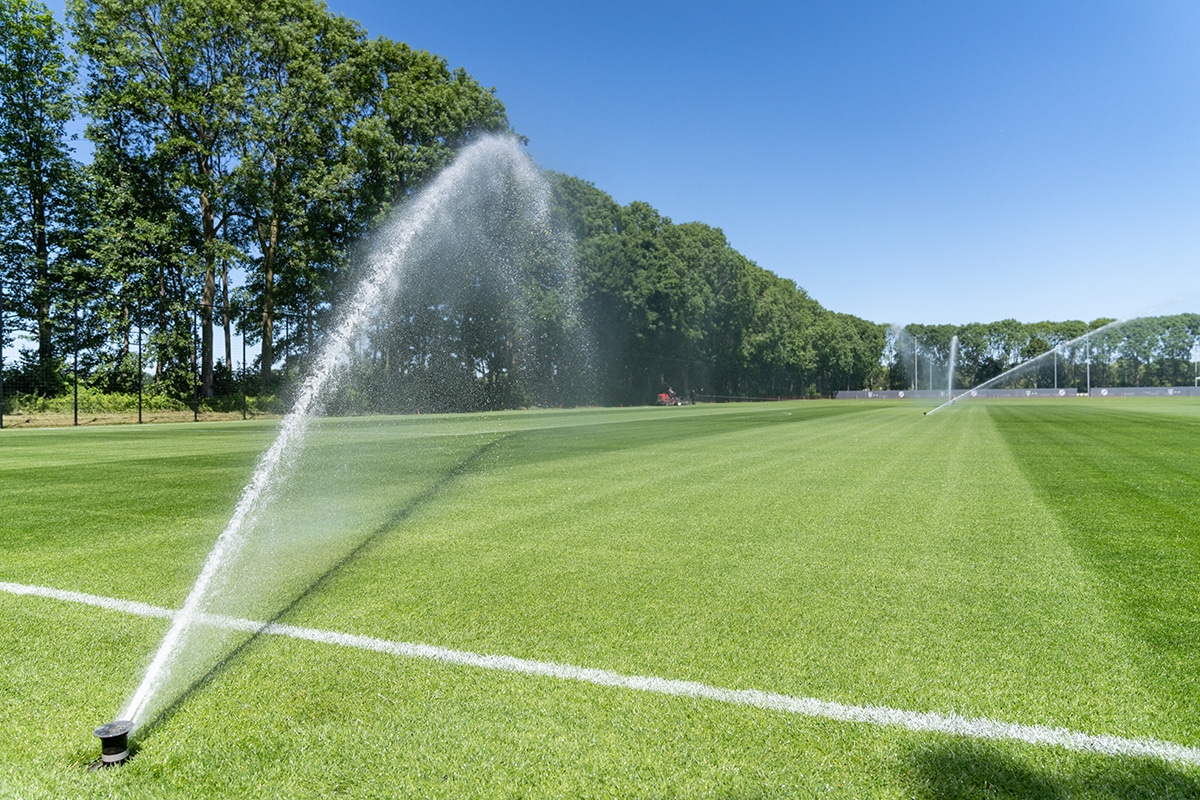
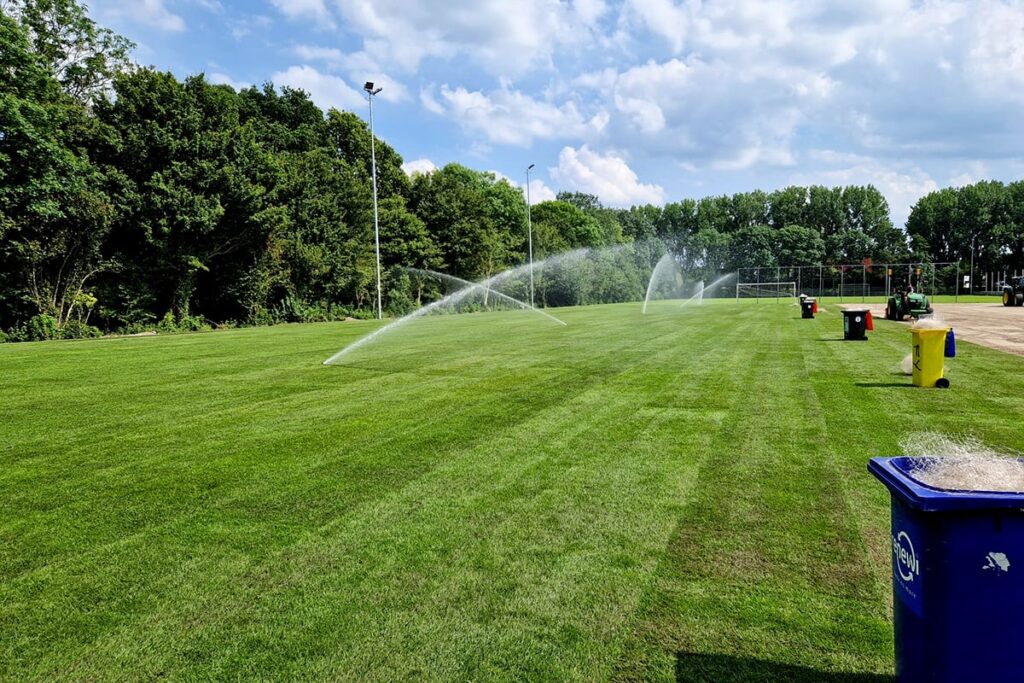
Another advantage is the quick realisation of a Grass2play mat. For Beerschot's training ground, Krinkels spent barely four weeks. In that time, a soil analysis was performed, drainage and sprinklers were checked and renewed, the existing and heavily milled turf was milled off, the top layer was treated with more than 1,000 tonnes of calibrated sand, the turf was placed, the field was rolled and aerated and, finally, the goals, lines and corner flags were installed. Immediately after that, the pitch was ready to play. “From now on, the focus is on maintenance. This mainly involves windrowing against thatch formation, regular aeration and overseeding with ryegrass. A crucial point of attention is preventing damage to the root system of the field marsh. Mowing, scarifying and cutting aeration are therefore out of the question. Overseeding is done by pricking. Because overseeding is done with ryegrass, which germinates faster, the balance of the turf shifts over time and the turf does have to be renewed after three to five years.”
In other words, Krinkels sees a lot of potential in the new concept not only for sports clubs, but also for public administrations that construct or renovate their sports grounds or recreational areas.
Despite the need for rotational re-sodding, a Grass2play mat is incidentally cheaper than an artificial turf pitch on an annual basis, according to Steven. “In addition, natural grass is better for the climate: water can infiltrate into the soil and you avoid creating heat islands. Besides the financial and climatic advantages, there are also fewer injuries, no building permit is needed and people experience it as more pleasant. Have you ever seen anyone picnicking on artificial grass?”
Please contact us directly at Krinkels nv.
 Contact us
The ‘K’ of landscape contractor Krinkels has symbolised the design and maintenance of public and private spaces for 50 years. A modern company with the expertise and practical experience of generations. Professionalism, efficiency and commitment in the middle of the landscape.
View Company Profile