keepitgreen.be
en

Platform for the management and construction of sports and golf courses
Lines can be much more circular, smarter and more economical
Anyone who maintains sports fields has known it for a long time: innovations in lines are not a luxury, but pure necessity. Fields are being used more intensively, volunteers are scarcer, materials are more expensive - and meanwhile the bar for sustainability is shifting higher year after year.
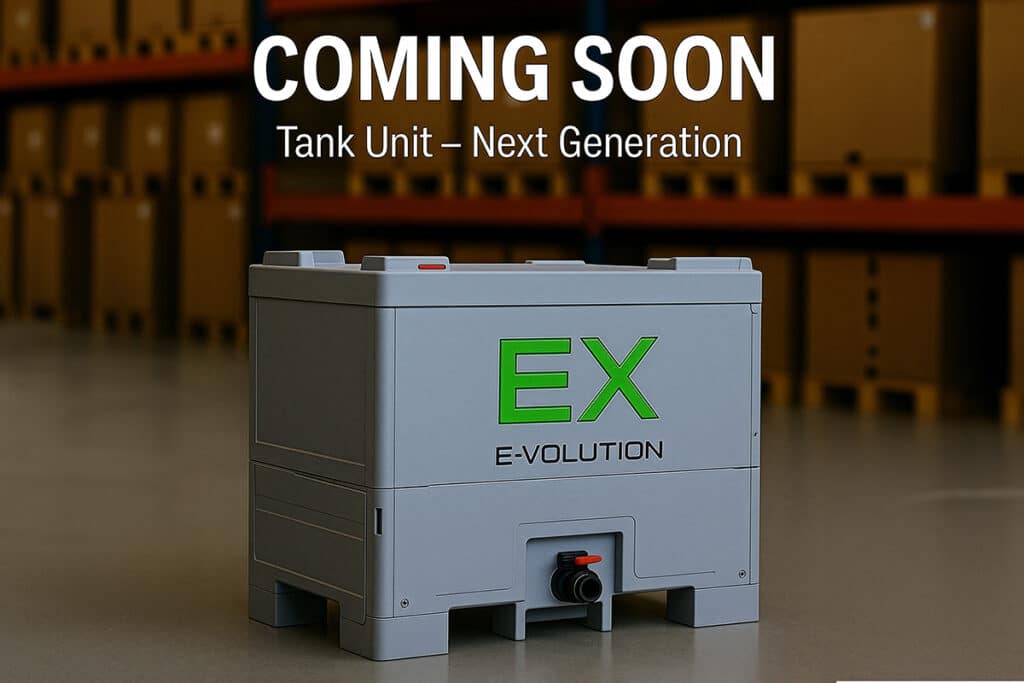
In that reality, Expo-Line is taking a particularly big step forward in 2026 with the Tank Unit Next Generation, a circular Bag-in-Box system that drastically reduces paint consumption, eliminates plastic waste and reduces maintenance almost to zero. It is not an isolated innovation, but the latest step in an evolution that began more than 20 years ago.
In 2002, Expo-Line was the first player in Europe to introduce fixed tank units to football clubs. The idea was radically innovative: supply paint in bulk and let clubs tap what they needed themselves. The result? Less packaging, less waste and a much more efficient workflow.
But pioneering also comes with limitations. Temperature fluctuations, half-full tanks, condensation, oxidation and bacteria formation made it clear that the technology would have to evolve over time. The basics were in place but the industry was ready for the next step.
Circular packaging only makes sense if the paint itself becomes much more efficient. That is why Expo-Line developed Brilliant Performance, meanwhile one of the highest-rated lining paints in Europe. Groundsmen - including Luke Russell of Leicester City - especially praise:
The effect is impressive. Clubs that used to use 1,000 to 1,500 litres per season are now often down to 250 to 500 litres. However, that low consumption brought a new issue: classic packaging suddenly became the least efficient part of the lining chain.
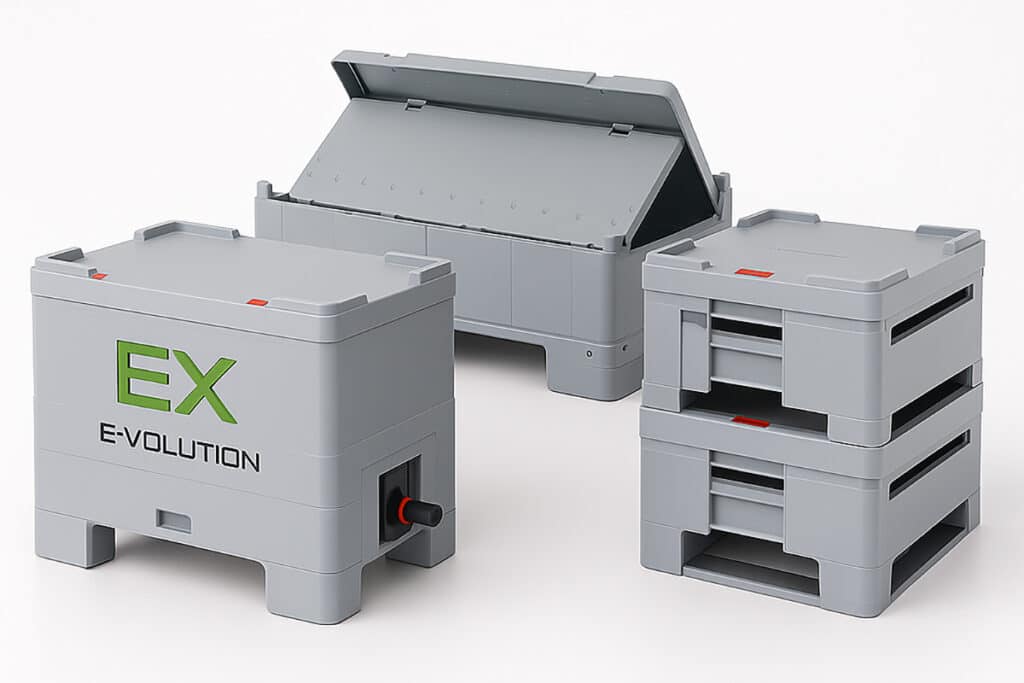
This is why Expo-Line is introducing the Next Generation Tank Unit in 2026: a fully circular system with a reusable outer container and an airless inner bag (liner) that does not allow oxygen to pass through. Advantages compared to IBCs and jerrycans:
This makes the system the logical successor to the 2002 tank units - but circular, modular and tailored to today's paint consumption.
The Tank Unit Next Generation does not stand alone. Together with Brilliant Performance, the E-Marker, Expo-Line's electric lining machine with digital pressure control, forms one integrated ecosystem. Clubs thus get a lining process that is precise in dosage, economical in consumption and reliable in line quality. Because pressure and atomisation are continuously controlled, lines remain consistent - regardless of weather conditions - and there is less wastage. The data function also gives clubs insight into line count, consumption and efficiency, while maintenance is reduced thanks to the diaphragm pump and unique spray technology.
The challenges for sports clubs are real: rising costs, stricter sustainability criteria, pressure on volunteers and fields that are used more intensively than ever. A system that generates less plastic waste, reduces the physical strain on volunteers, cuts down on transport and CO2 emissions, while at the same time increasing the quality of the lines, therefore offers direct added value. Clubs working with the prototypes describe the process as simpler, neater and more consistent. A step forward that reflects the reality of modern sports infrastructure.
Meanwhile, the first clubs are running prototypes of the Tank Unit Next Generation. The feedback is remarkably unanimous: operation is more intuitive, the environment remains tidier and waste drops dramatically. The official roll-out will follow in 2026, through selected dealers and through club subscription packages.