keepitgreen.be
en

Platform for the management and construction of sports and golf courses
Chief greenkeeper Ben Schouten's overseeding regime
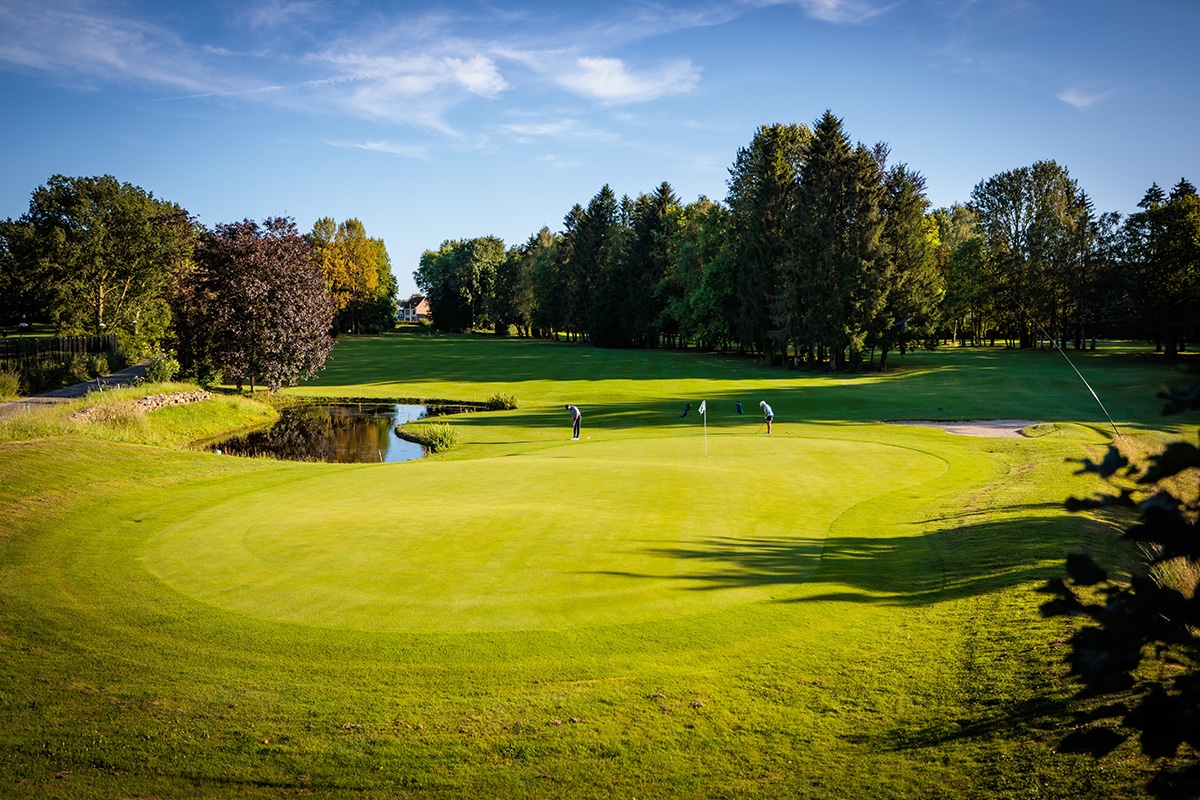
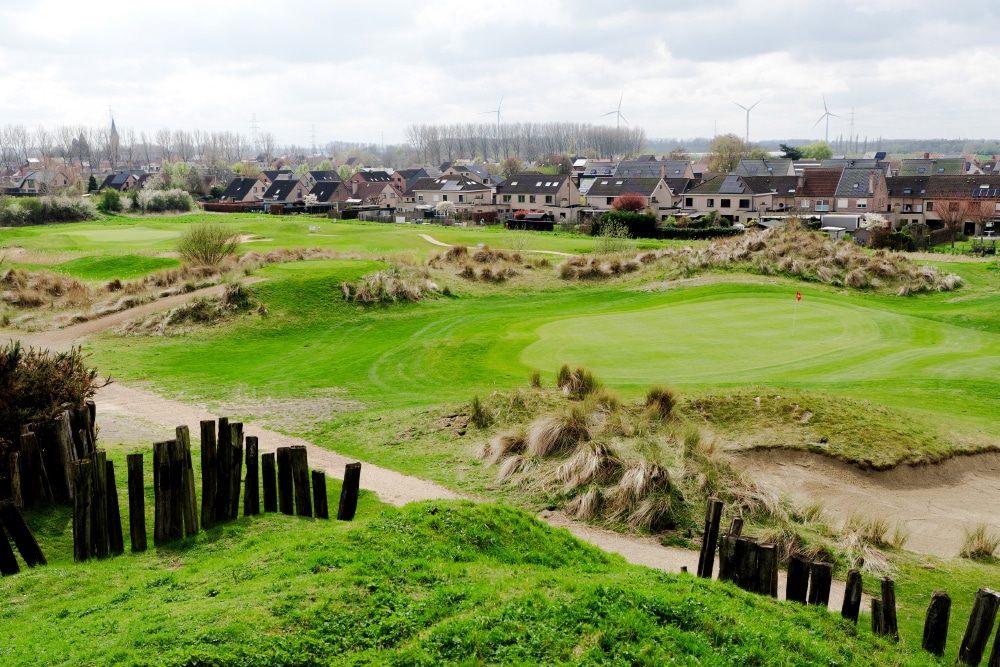
With a course that slaloms through marram grass and ecozones, Golfclub Beveren is considered the most beautiful inland links course in Flanders. This was recently confirmed by Leading Courses' recognition of it as the best 9-hole golf club in the country. But zoom out onto the rich nature reserve and you immediately discover a more challenging setting. After all, Golfclub Beveren is located in the heart of the Antwerp port, right next to the important Kallo lock. A unique challenge for head greenskeeper Ben Schouten.
Ben Schouten has been working at golf clubs in Belgium and the Netherlands for 18 years and has been responsible for greenkeeping at Golf Club Beveren through contracting company AHA de Man since 2023. Together with two fellow greenkeepers, he looks after the nine holes, four compact holes, the driving range and the putting and chipping greens. In doing so, he pays particular attention to the choice of grass and irrigation, among other things.
“The challenges of Golf Club Beveren are not minor,” says Schouten, who, with his 18 years of experience and 15 fellow head greenskeepers within AHA De Man, has quite a bit of comparison material. “On the one hand, with 850 members, the player pressure is relatively high; on the other hand, this is a pure sand course, which in some places has as much as 15 metres of accumulated sand. In other words, there is no water retention. Every raindrop that falls is lost almost immediately. So proper sprinkling is absolutely essential for us.”
To cope with the increasingly severe drought problem, Golfclub Beveren recently invested in a brand new sprinkler system with full online and remote control, but ironically, continuous irrigation also brings another challenge.
This is because the water drawn from a stream behind the golf course is completely brackish due to the persistent sailing up and down of sea vessels in the surrounding harbour. Especially in summer, when the water level in the stream drops and there is thus less mixing with the salty water flowing from the canal, the salinity is very high. And that, in turn, poses a challenge to the grasses on the course.
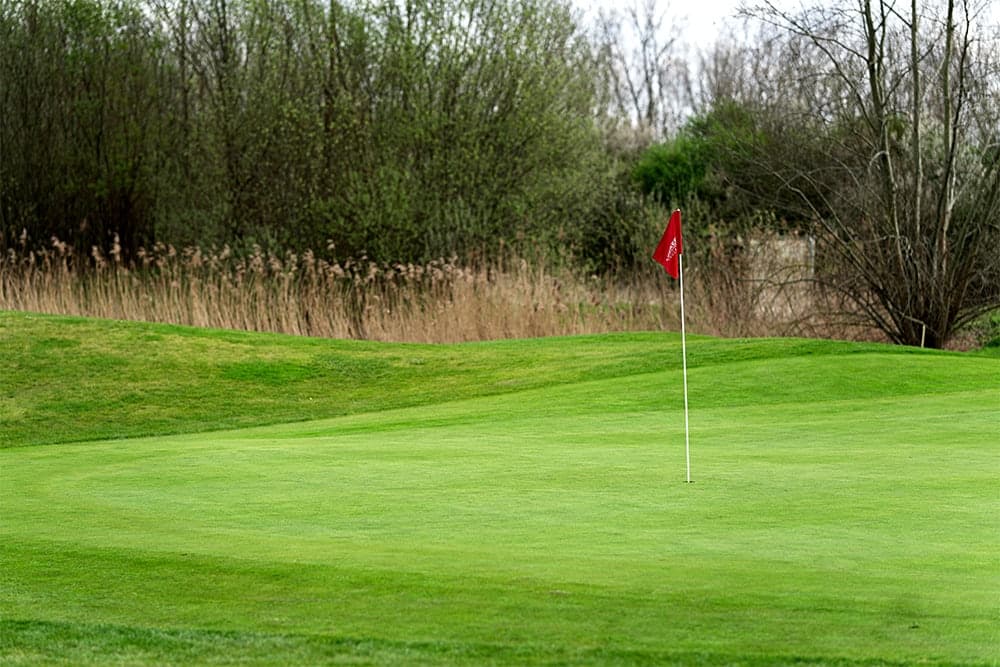
“White ostrich grass is about the only grass species for greens that can withstand the high salt content of the sprinkler water,” Schouten knows.
“Traditionally, therefore, the greens at Golf Club Beveren are sown in and overseeded with DLF's Cobra Nova, which is highly regarded on both the STRI list and the NTEP. Of course, white ostrich grass requires more maintenance - the turf is pruned twice every four weeks, once with the Vertidrain and once with Maredo cages, and in between we keep on mowing vertically to prevent the formation of thatch, sanding, fertilising, ... - but eventually you get into that rhythm. Besides, it doesn't outweigh the costs that would otherwise be needed to desalinate the brackish water.”
In total, Schouten overseeds at Golf Club Beveren two to three times a year. He prefers to do this by hand, after vertical mowing. “That not only ensures the least inconvenience, but also the most beautiful result. Moreover, ostrich grasses do not need to be sown deep at all, so it is also better for fast germination.” Remarkably, however, Cobra Nova is only sown for the first time after May.
“Since last year, for the first sowing in spring, we do not use white, but ordinary ostrich grass, in particular DLF's Arrowtown. This already germinates at much lower temperatures, filling bare spots quickly and also preventing street grass, for example, from getting a chance. As the season progresses, the more aggressive Cobra Nova displaces the ordinary ostrich grass, but in this way we guarantee a good quality of the turf even in spring. Perhaps the best quality in Belgium,” Schouten concludes, with a nod to the recent award by Leading Courses.
DLF is a global leader in grasses for golf courses and sports fields. The company develops innovative grass varieties with exceptional wear resistance, density, disease resistance and drought tolerance to maximise turf quality and playing hours.
By breeding varieties with better drought tolerance, disease resistance and weed suppression, DLF also prepares grasses for more unstable weather conditions and fertiliser and chemical restrictions. In this process, DLF works closely with research institutes and scientific experts.
Please contact us directly at DLF BV.
 Contact us
The best grass for sports, recreation and livestock DLF is the world market leader in grass seeds for sports, recreation and livestock. With a market share of 50% in Europe and 30% worldwide, chances are that the grass you enjoy in your garden was sown with our grass seed. If you enjoy sports then you probably have [...]
View Company Profile