keepitgreen.be
en

Platform for the management and construction of sports and golf courses
Club in the spotlight - Brabant Golf
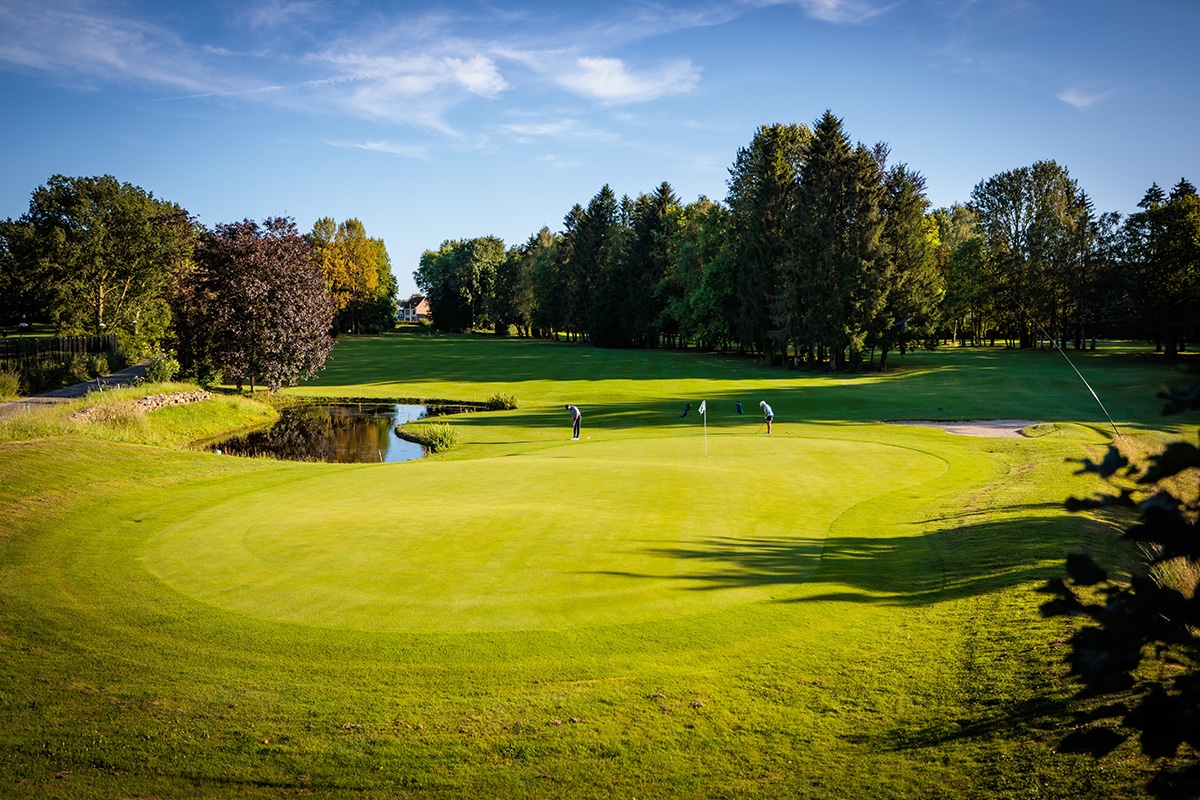
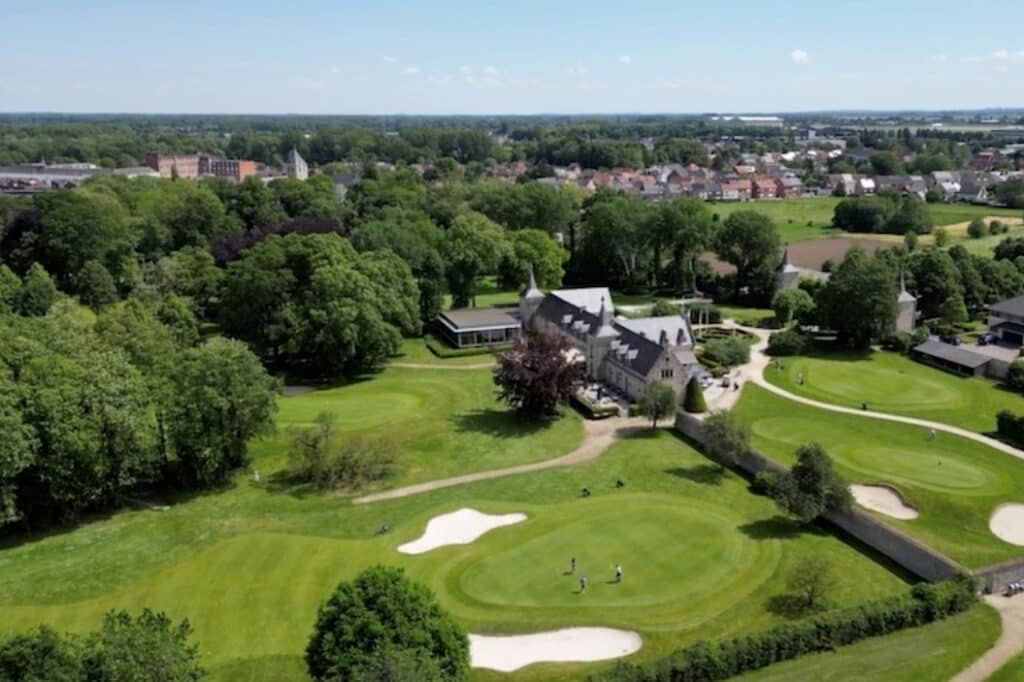
A stone's throw from Brussels Airport, where planes swoop over the fairways, lies one of Flanders' most progressive golf clubs. Brabant Golf is not only a sporting oasis on the outskirts of the capital, but also a laboratory for ecological management. At the helm: Dimitri Moerenhout, head greenkeeper with vision, supported by his experienced predecessor Philippe Mallaerts, who continues to help set the course after his retirement as a consultant.
Founded forty years ago as a distinctly Flemish golf course, the club today boasts eighteen challenging holes on more than forty hectares. “We challenge each other to keep raising the bar,” says Mallaerts. “This double vision keeps the course sharp and future-proof.”
“Philippe is my back-up, my sounding board, my memory,” Moerenhout says. “He knows the job inside out. I take charge now, but it's a luxury to be able to fall back on his experience on bigger dossiers or when things get a little tense.” Philippe also remains active in the sector: as vice-president of GAB (Greenkeepers Association Belgium), he shares his knowledge through study days, workshops and training courses.
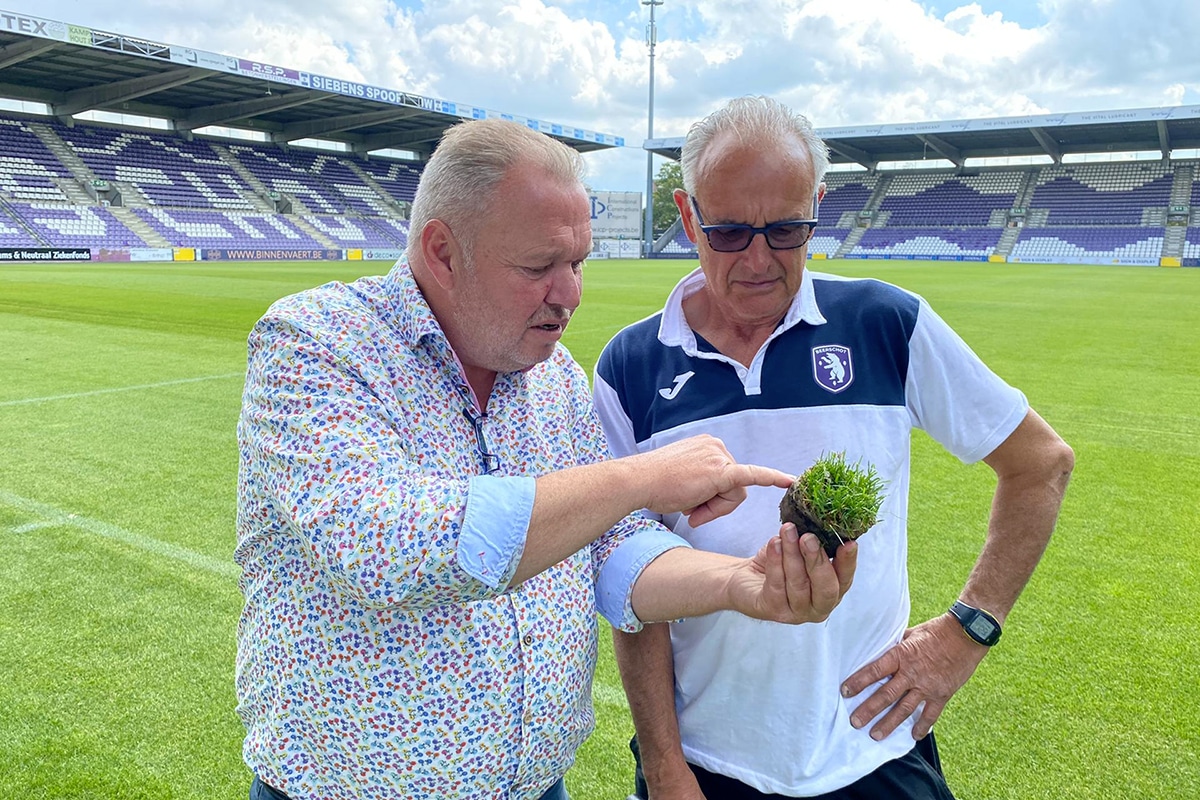
Innovation is daily practice here. Moerenhout clarifies: “I regularly measure the moisture content and the amount of salts in the soil, and also keep track of how many litres of rain have fallen. I look at that data together with what I see visually on the track. It is the combination of measuring and the tangible image that ensures the right interpretation and appropriate actions.”
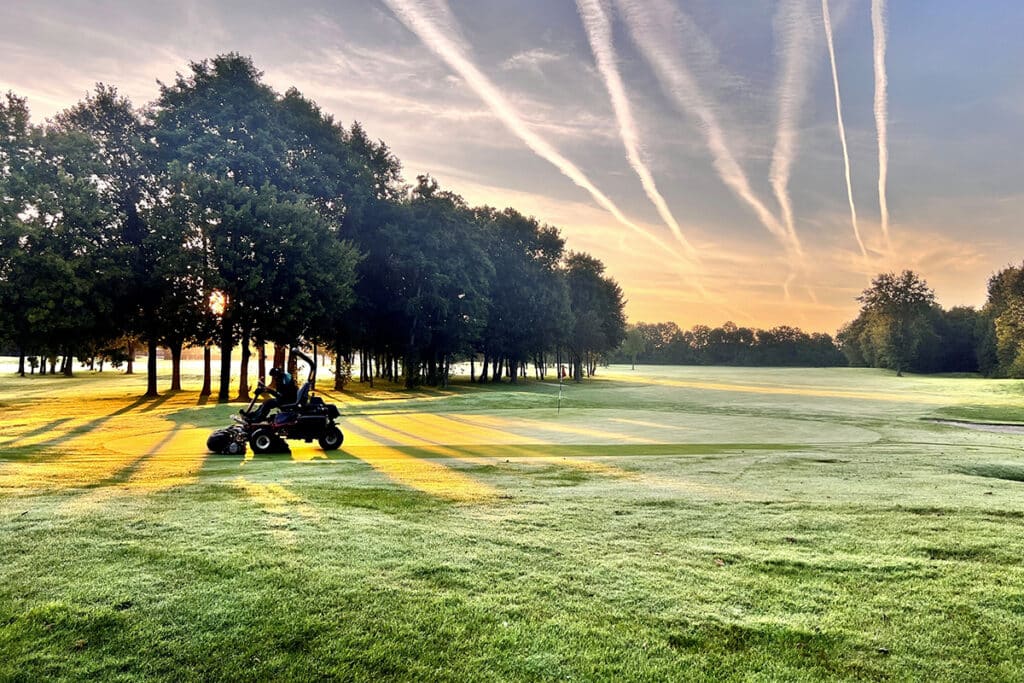
The machinery fleet also received a green upgrade. An electric greens mower, quiet fairway mower and a fleet of battery-powered golf carts significantly reduce diesel consumption every year. Solar panels on the roof of our shed charge the batteries. “We need to start reducing CO2 emissions and focus on being as climate-neutral a golf club as possible,” says Moerenhout.
The runway is right under the approach route from Zaventem, but ecological thinking does get free rein here. Because the summers are getting drier, the showers heavier - and you can feel that on the course. Brabantse Golf responds with a smart system that connects both extremes: rainwater flows into wadis and a central basin. That reservoir, which actually belongs to the airport, is fully integrated into the course and supplies 100% of sprinkler water. Chemical crop protection systematically disappeared from the greens over the years. Biostimulants, wetting agents and resistant grass mixtures are taking over. “Zerotolerance is not a threat, but a challenge to work more efficiently,” says Mallaerts.
For years, the ambitious golf club has had just about every sustainability certificate in existence, including the GEO label and the Sustainability Compass. “The electrification and the water plan were our biggest steps in CO2 reduction,” it says. But the ambitions reach further: “We aim for more biodiversity on the track: butterflies, woodpeckers, insects, bats. Not working against, but with nature.”
The sector is ageing, the influx is stalling. “Greenkeeping is a unique job, but few young people realise that,” says Moerenhout. “We try to get them excited through schools, give them growth opportunities and let them take training courses. You have to invest time. A good greenkeeper is not born, you grow it.”
Thanks to GAB, he also gets to inspire people outside the club. “We offer training courses on leadership, soil analysis, burnout prevention. Everything that the job demands today but didn't exist before.”
Where will Brabant Golf be in 2030? Mallaerts smiles: “With a smart drainage system that can handle extreme rain and a robust turf that survives long droughts. But above all: as a place where nature and play reinforce each other.” Moerenhout
adds: “The future does not require a battle with nature, but cooperation. That starts with the grass under your feet.”