keepitgreen.be
en

Platform for the management and construction of sports and golf courses
Belijnen kan veel meer circulair, slimmer en zuiniger
Wie sportvelden onderhoudt, weet het al lang: innovaties in belijning zijn geen luxe, maar pure noodzaak. Velden worden intensiever gebruikt, vrijwilligers schaarser, materialen duurder – en intussen schuift de lat voor duurzaamheid jaar na jaar hoger.
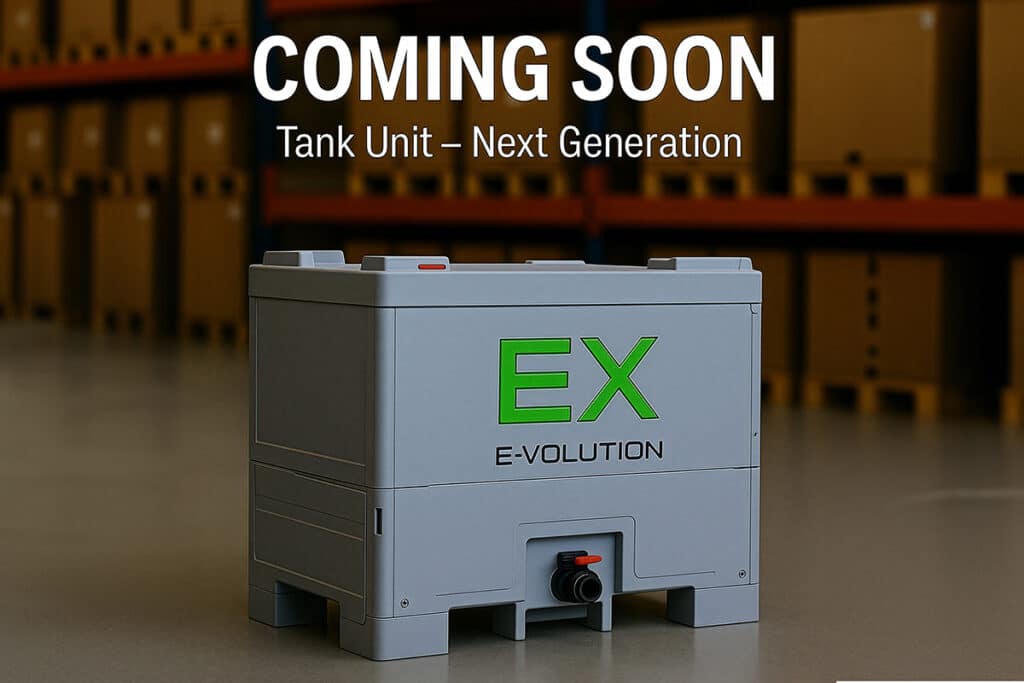
In die realiteit zet Expo-Line in 2026 een bijzonder grote stap vooruit met de Tankunit Next Generation, een circulair Bag-in-Box-systeem dat verfverbruik drastisch terugdringt, plastic afval elimineert en onderhoud bijna tot nul herleidt. Het is geen losse innovatie, maar de nieuwste stap in een evolutie die meer dan twintig jaar geleden begon.
In 2002 was Expo-Line de eerste speler in Europa die vaste tankunits introduceerde bij voetbalclubs. Het idee was radicaal vernieuwend: verf aanleveren in bulk en clubs zelf laten tappen wat ze nodig hadden. Het resultaat? Minder verpakkingen, minder afval en een veel efficiëntere workflow.
Maar pionierswerk komt ook met beperkingen. Temperatuurschommelingen, halfvolle tanks, condensatie, oxidatie en bacterievorming maakten duidelijk dat de technologie op termijn zou moeten evolueren. De basis zat goed maar de sector was klaar voor een volgende stap.
Circulaire verpakkingen hebben alleen zin als de verf zélf veel efficiënter wordt. Daarom ontwikkelde Expo-Line Brilliant Performance, intussen een van de hoogst gewaardeerde belijningsverven in Europa. Groundsmen – onder wie Luke Russell van Leicester City – prijzen vooral:
Het effect is indrukwekkend. Clubs die vroeger 1.000 tot 1.500 liter per seizoen gebruikten, dalen nu vaak tot 250 à 500 liter. Dat lage verbruik bracht echter een nieuw vraagstuk met zich mee: klassieke verpakkingen werden plots het minst efficiënte onderdeel van de belijningsketen.
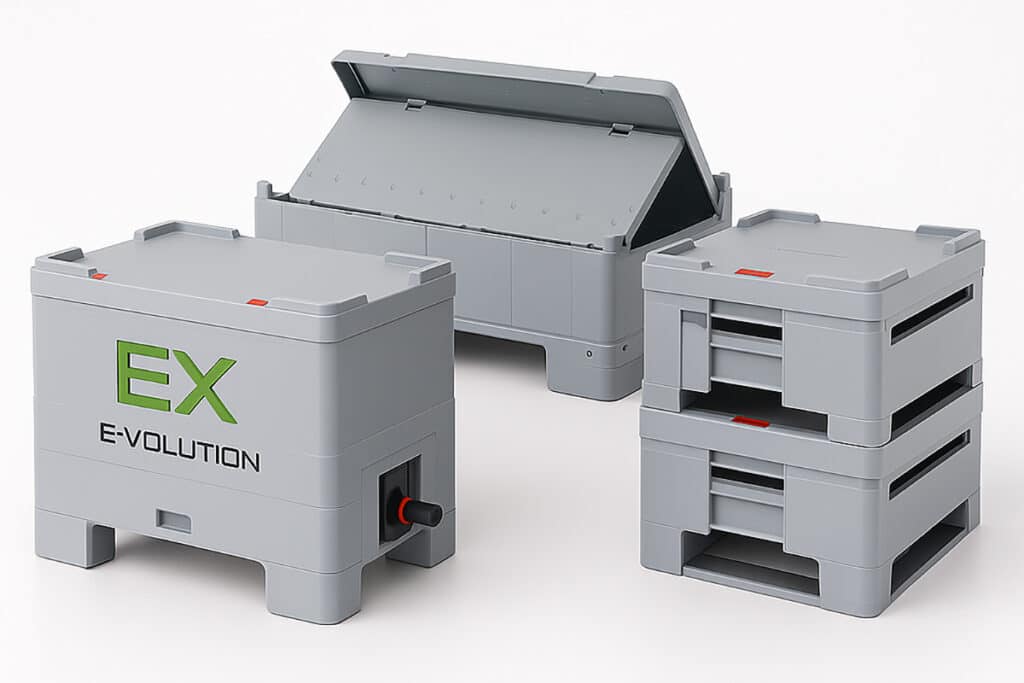
Daarom introduceert Expo-Line in 2026 de Tankunit Next Generation: een volledig circulair systeem met een herbruikbare buitencontainer en een luchtledige binnenzak (liner) die geen zuurstof doorlaat. Voordelen in vergelijking met IBC’s en jerrycans:
Het systeem is daarmee de logische opvolger van de tankunits uit 2002 – maar dan circulair, modulair en afgestemd op het verfverbruik van vandaag.
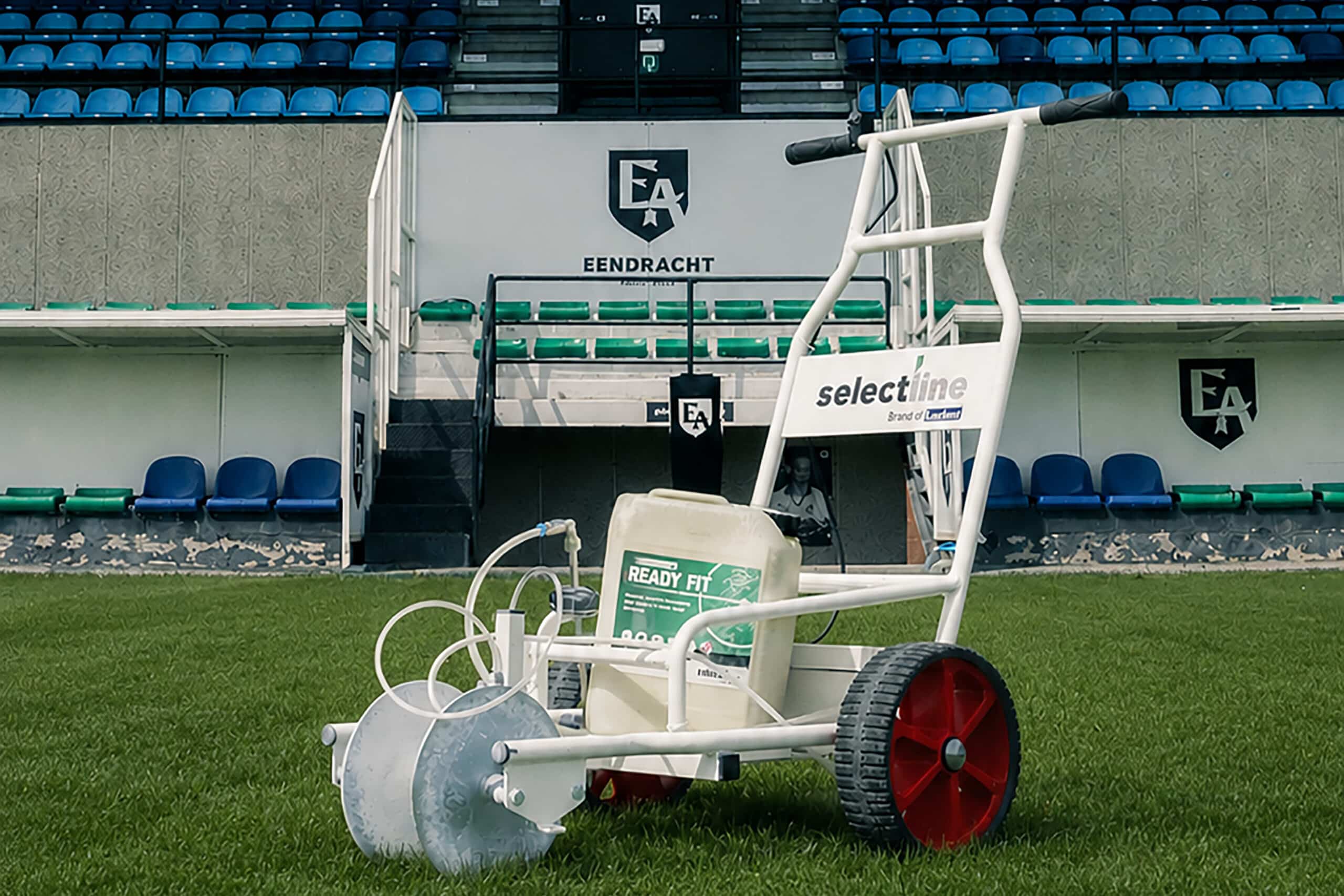
De Tankunit Next Generation staat niet op zichzelf. Samen met Brilliant Performance vormt de E-Marker, Expo-Line’s elektrische belijningsmachine met digitale drukregeling, één geïntegreerd ecosysteem. Clubs krijgen daarmee een belijningsproces dat nauwkeurig is in dosering, zuinig in verbruik en betrouwbaar in lijnkwaliteit. Doordat de druk en verneveling continu gecontroleerd worden, blijven lijnen consistent – ongeacht weersomstandigheden – en ontstaat er minder verspilling. De datafunctie geeft clubs bovendien inzicht in aantal lijnen, verbruik en efficiëntie, terwijl het onderhoud dankzij de membraanpomp en unieke sproeitechnologie beperkt blijft.
De uitdagingen voor sportclubs zijn reëel: stijgende kosten, strengere duurzaamheidscriteria, druk op vrijwilligers en velden die intensiever gebruikt worden dan ooit. Een systeem dat minder plastic afval genereert, de fysieke belasting van vrijwilligers verlaagt, minder transport en CO2-uitstoot veroorzaakt én tegelijk de kwaliteit van de lijnen verhoogt, biedt dan ook een directe meerwaarde. Clubs die met de prototypes werken, omschrijven het proces als eenvoudiger, netter en consistenter. Een stap vooruit die aansluit bij de realiteit van moderne sportinfrastructuur.
De eerste clubs draaien intussen met de prototypes van de Tankunit Next Generation. De feedback is opvallend unaniem: de werking is intuïtiever, de omgeving blijft netter en het afval daalt drastisch. In 2026 volgt de officiële uitrol, via geselecteerde dealers en via abonnementsformules voor clubs.