keepitgreen.be
en

Platform for the management and construction of sports and golf courses
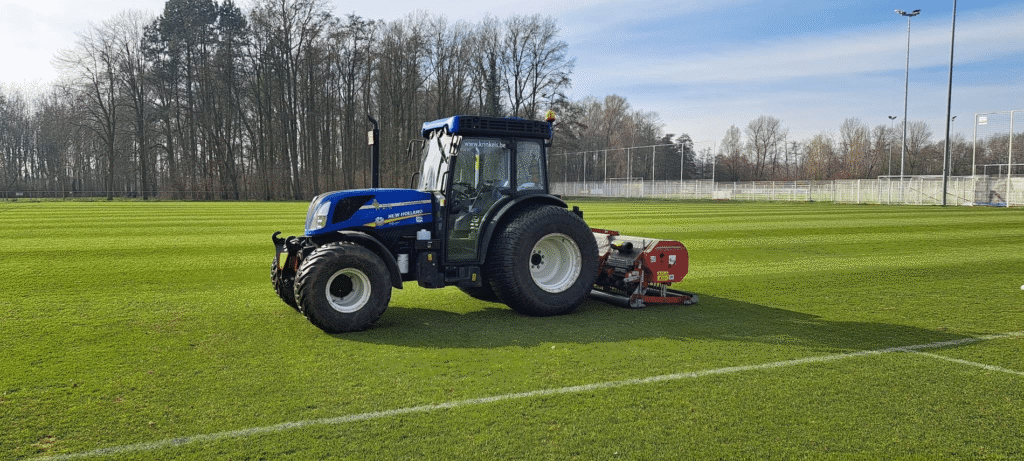
Which weeds are the most damaging to football pitches?
Football clubs that play on natural grass demand a high-quality playing surface, preferably free from weeds. But does every unwanted plant really need to be controlled or removed? Landscape contractor Krinkels recommends a four-step approach, focusing only on weeds that genuinely threaten pitch quality.
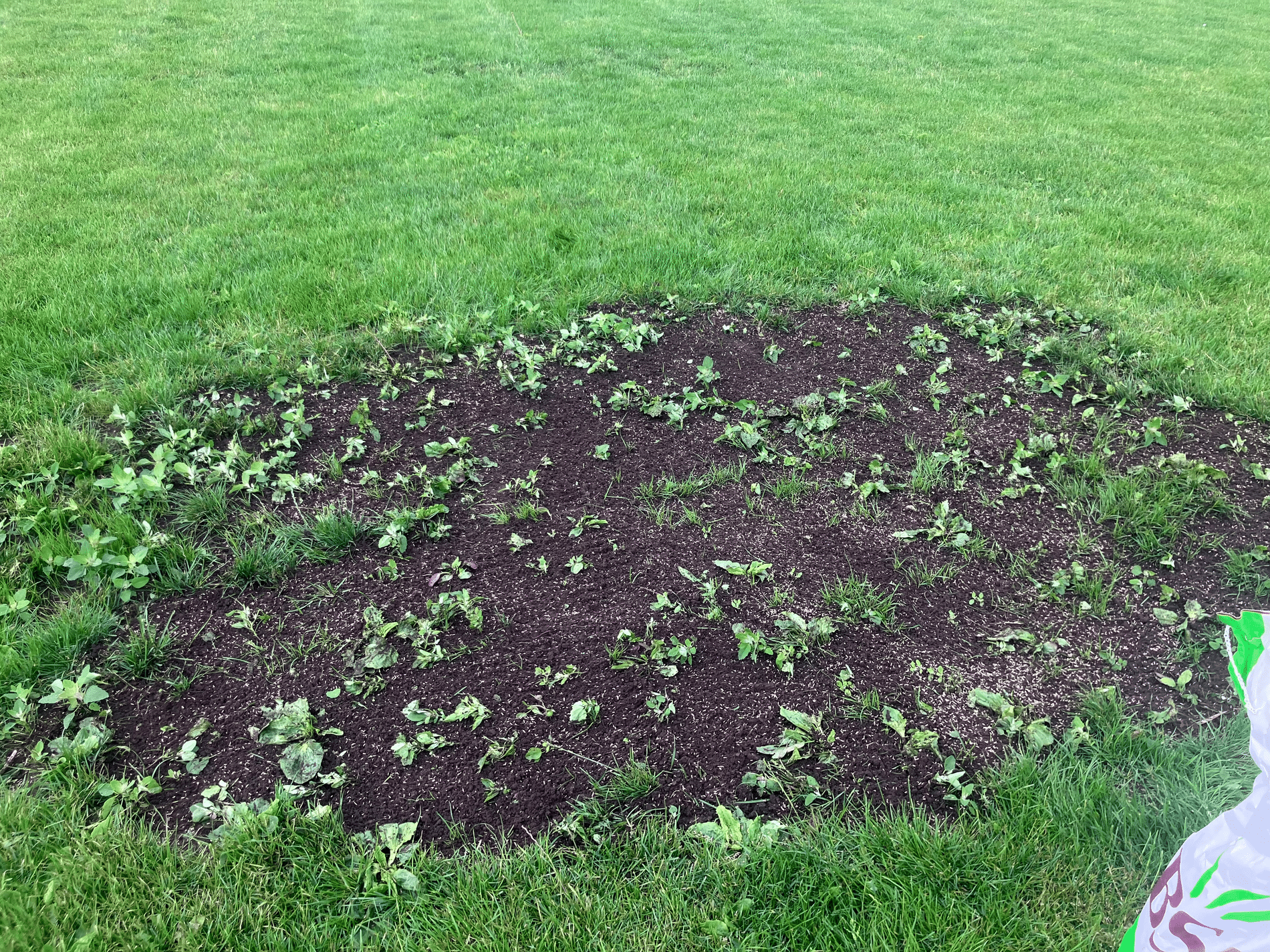
Emile Windey, Project Manager at Krinkels, explains: “The best way to manage weeds on a natural grass pitch is through a four-step approach. The first step is to assess which weed species are present and in what quantities. The most common weeds include broadleaf plantain, clover, daisies, dandelions, knotgrass and annual meadow grass.”
“The next question is whether those species and their abundance actually pose a problem for the quality of the playing surface. If they do, you move on to the third step: managing the pitch in such a way that a dense, fully closed sward can be restored.
It is important to understand that many weed species commonly found in natural grass pitches, such as clover, daisies and fat hen, do not require active control because they do not negatively affect the turf. They disappear naturally through fertilisation, mowing and regular play.”
“Prevention is by far the most important step. It is essential to maintain a dense turf canopy in which weed seeds have little opportunity to germinate, while also preventing weed seeds from surrounding areas from spreading onto the pitch. That is why, at Krinkels, we always renovate pitches using clean rootzone material, clean machinery and high-quality grass seed mixtures.”
“Where possible, retain as much of the existing grass cover as you can and ensure adequate irrigation so that newly sown grass seed germinates quickly and evenly. This helps prevent excessive areas of bare soil, which are highly susceptible to weed invasion.
For the same reason, avoid power harrowing without careful consideration, especially during dry conditions. Removing the upper soil layer exposes dormant weed seeds to light and air, creating ideal conditions for germination.”
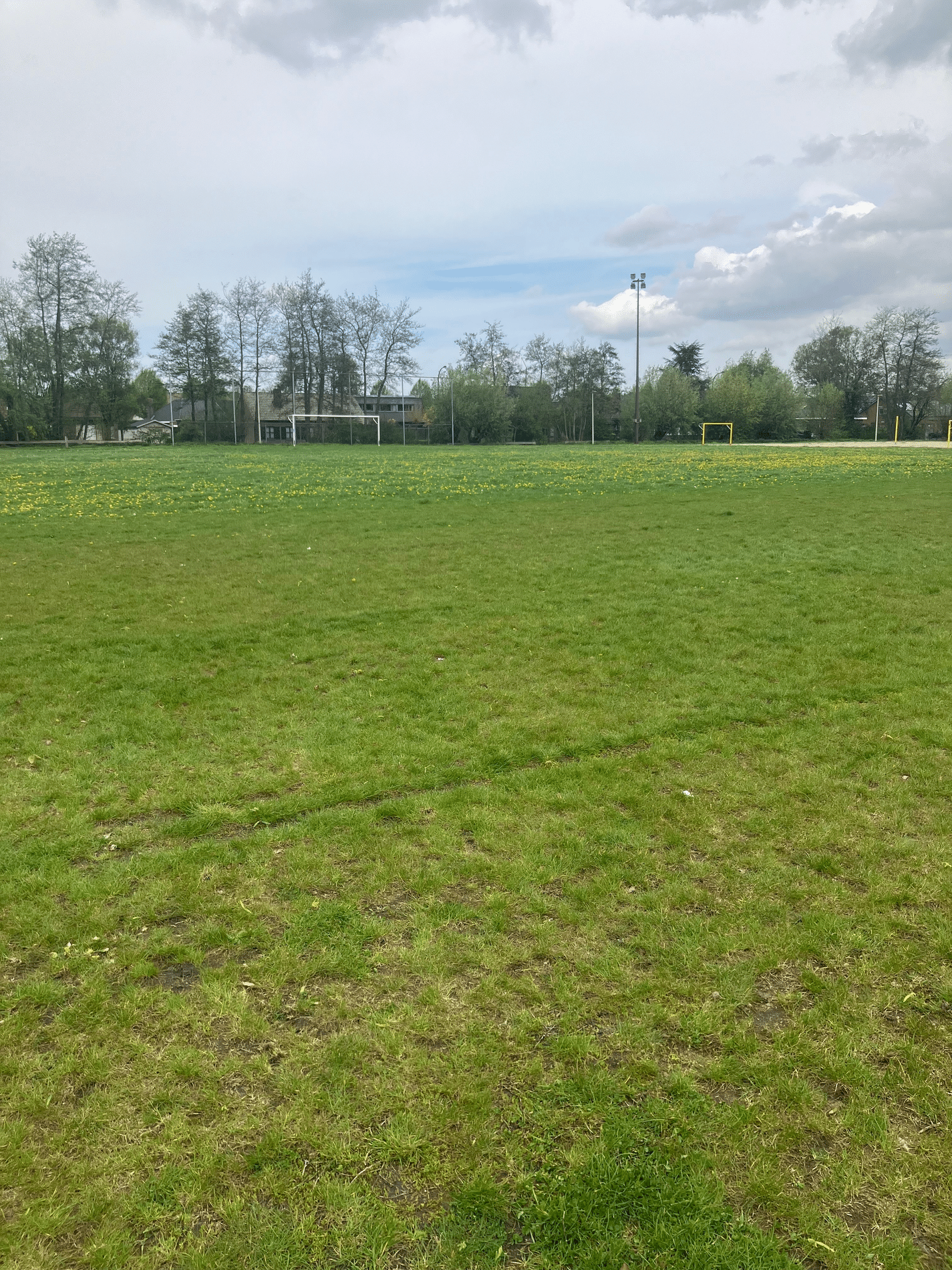
If harmful weeds such as broadleaf plantain are growing around the football pitch, their seeds will inevitably find their way onto the playing surface. For that reason, weed species present in the immediate surroundings should also be managed regularly.
“Weed control is only the fourth step in achieving a high-quality playing surface. The method you choose depends on the dominant weed species. As mentioned earlier, clover, daisies and fat hen generally do not require treatment. They may create a less uniform appearance, but they have no impact on the playing quality of the pitch. The ball continues to roll perfectly well.”
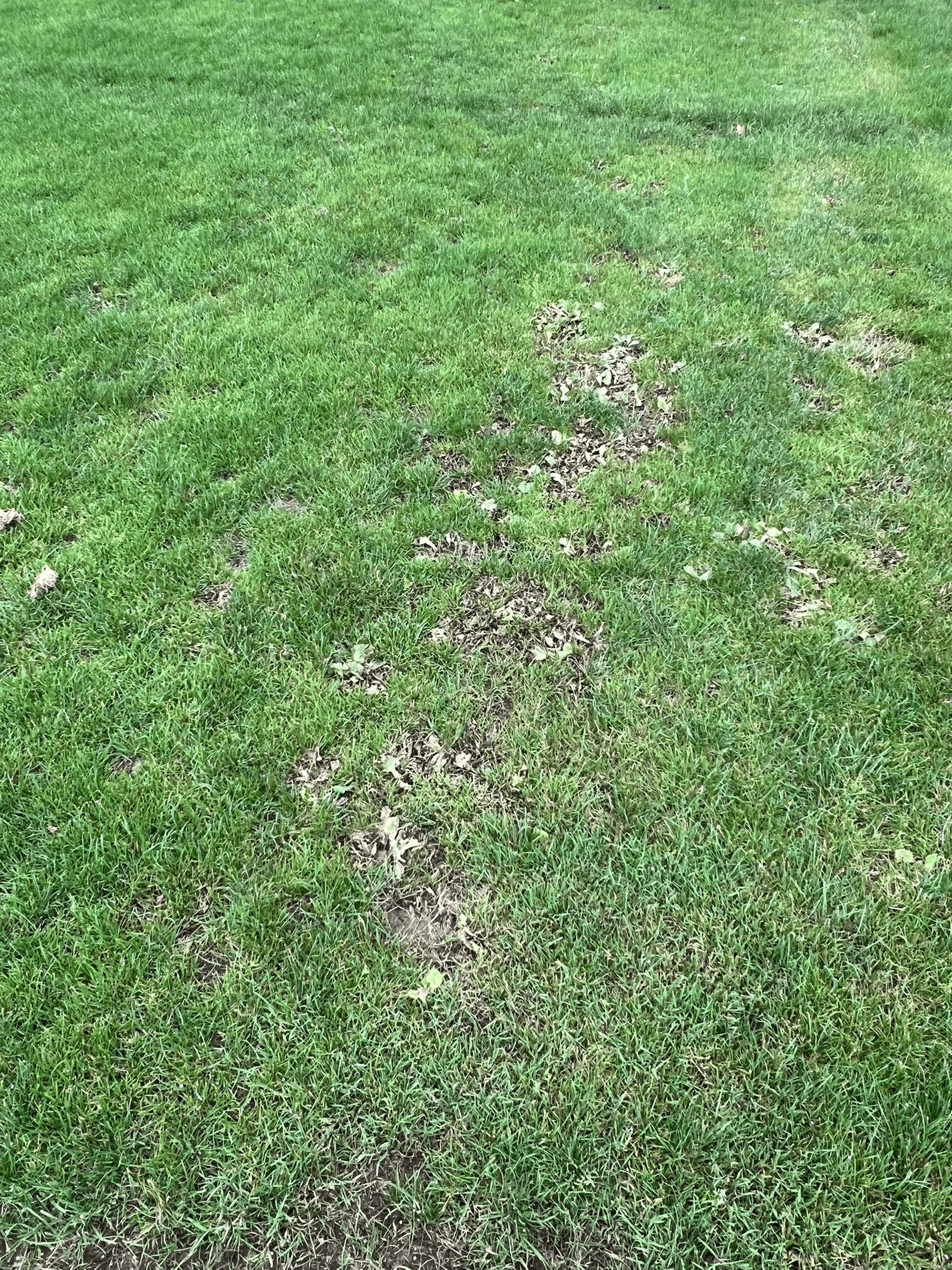
“The herbicides used to remove annual meadow grass also damage desirable turfgrass species. Because annual meadow grass has a shallow root system, it is usually the first grass to turn yellow during dry periods. The most effective control methods are chain harrowing, overseeding and/or adjusting irrigation practices.” On approximately 90% of the pitches where Krinkels is required to intervene, broadleaf plantain is present. “For football pitches, broadleaf plantain is the most harmful weed. Individual plants can reach up to 15 centimetres in diameter and are highly tolerant of both mowing and wear. Although the plant dies back during winter, bare patches remain where it has grown. These areas create an uneven and bumpy playing surface, increasing the risk of player injuries.
Broadleaf plantain can be controlled mechanically by severing the root system and aerating the pitch. Chemical control is also possible, but in Flanders an exemption must first be obtained from the Flemish Environment Agency to use plant protection products.”
Please contact us directly at Krinkels nv.
 Contact us
De ‘K’ van landschapsaannemer Krinkels staat al 50 jaar symbool voor de inrichting en het onderhoud van publieke en private ruimtes. Een modern bedrijf met de vakkennis en praktijkervaring van generaties. Professionaliteit, efficiëntie en betrokkenheid midden-in-het-landschap.
View Company Profile