keepitgreen.be
en

Platform for the management and construction of sports and golf courses
Robots aren’t the real revolution
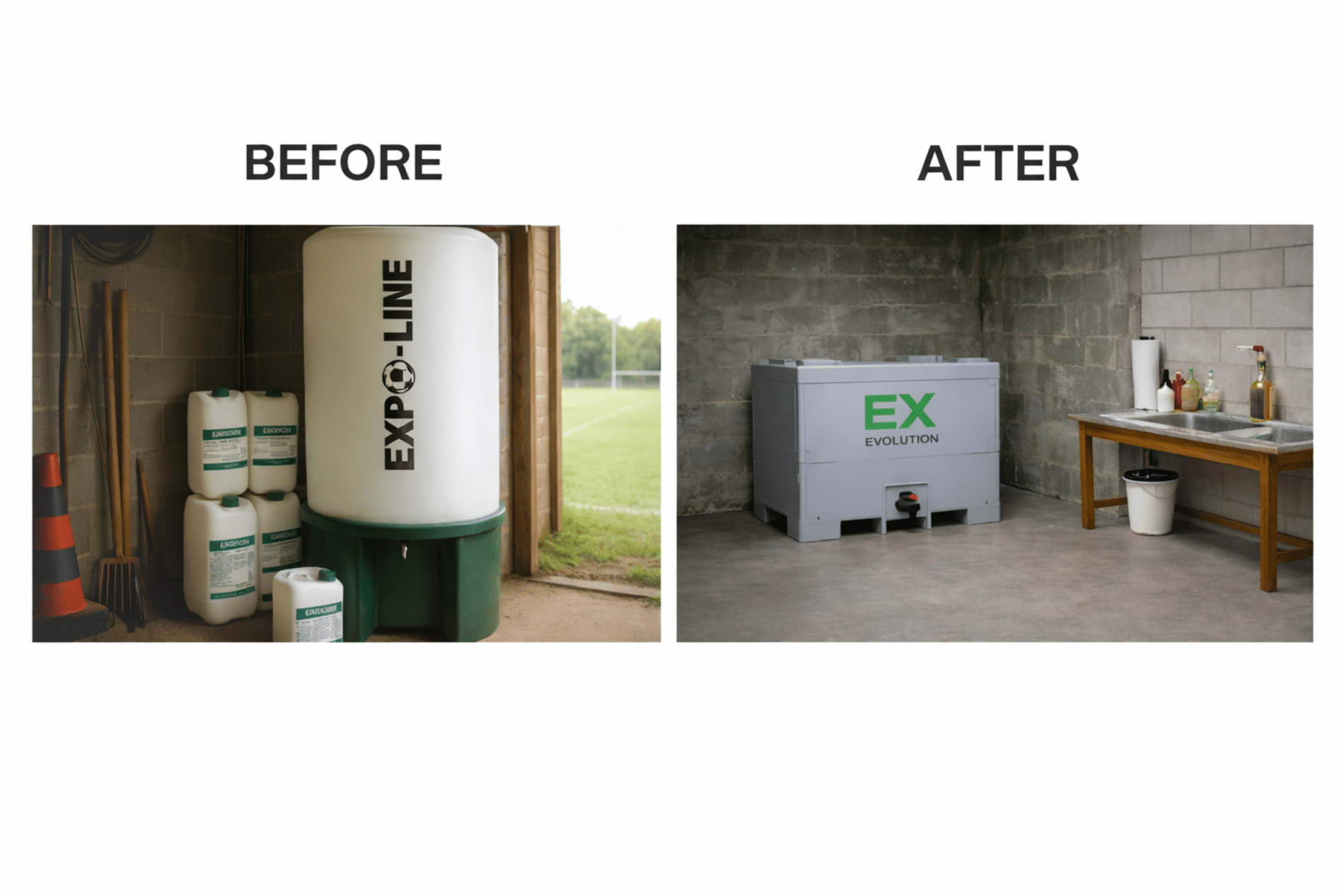
Every season, four million empty jerrycans in Europe are ready for the recycling centre. However, ‘empty’ is a relative term: the sediment at the bottom can no longer be dislodged by shaking or drilling. As a result, the product often becomes unusable before it has been completely used up. Therefore, anyone looking to streamline the marking process shouldn’t start with the packaging, but with the coating itself. “With the launch of EX-Evolution, we aim for a complete system overhaul,” explains Raf Bogaerts, CEO of Expo-Line.
No match without line marking, no line marking without chalk. Or at least that was the case until 1989, when coatings were quickly adopted by groundsmen. More user-friendly, to a certain extent. “It may sound like a minor detail, but it’s not, considering that the pigments in standard paints settle heavily at the bottom of the container,” explains Raf Bogaerts. “This triggers a chain of problems. That’s why you must always shake the container before use. But once your coating has settled, the water exerts increasing pressure on the pigment, making it harder to turn it back into a liquid, usable paint. Clubs are currently buying ten to twenty jerrycans at once. Afterwards, the paint sits unused in their storage facilities.” If jerrycans have to be thrown away because the pigments have become unusable, up to twenty per cent ends up as chemical waste.
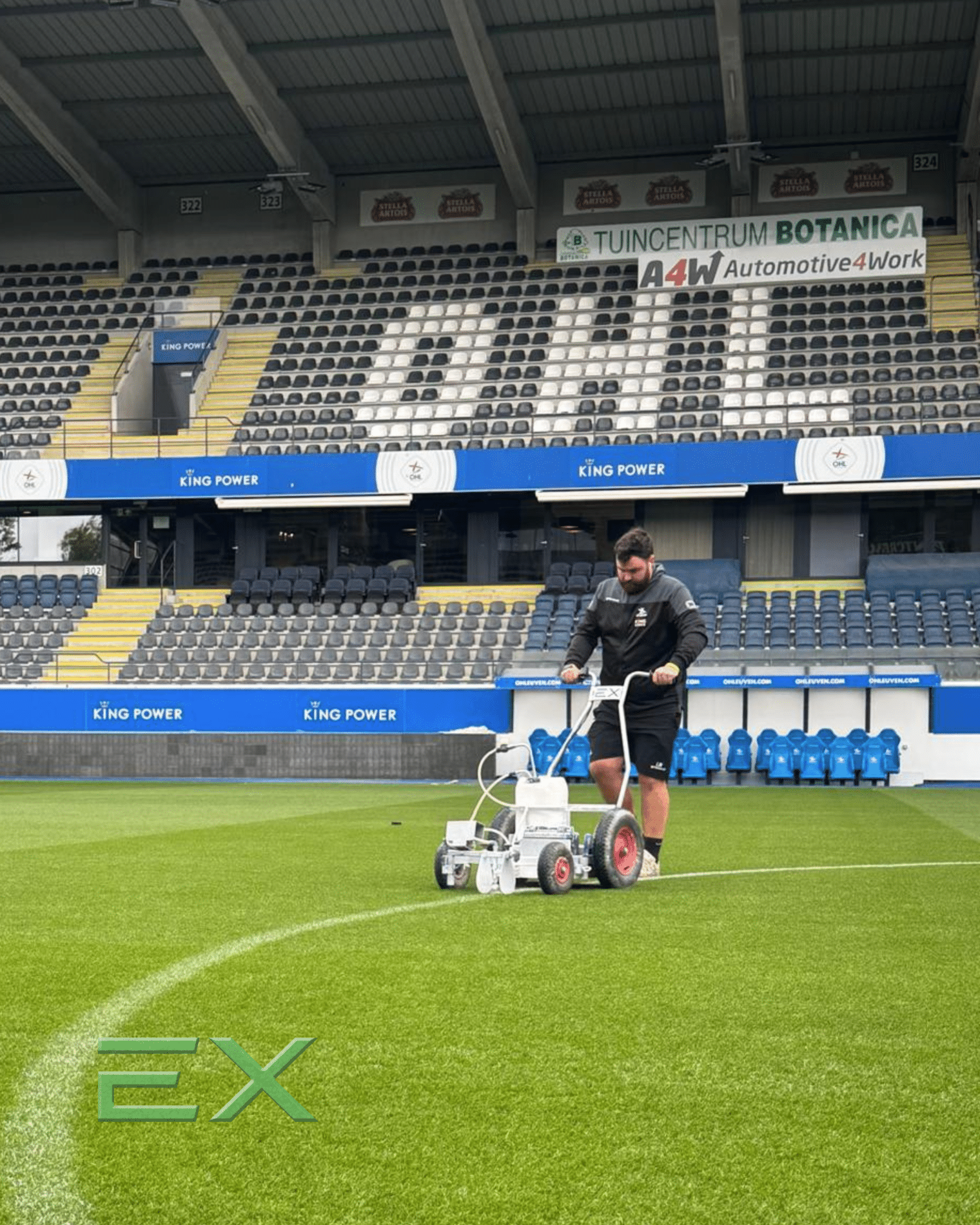
That is why, more than twenty years ago, Expo-Line launched a unique product: a line marking paint that does not settle. Luke Russell, head groundsman at OHL Leuven, puts it bluntly: “For the first time, I can use up an entire jerrycan.” He therefore described Expo-Line’s coatings as superior. Between 2000 and 2002, the road marking manufacturer developed a ready-to-use product that was free from settling. They describe it as nothing less than a system shift that is set to reduce packaging by 90 per cent. Bogaerts: “The biggest innovation in field marking today isn’t in robots or packaging, but in the coating. If it remains stable, the settling stops and the residue is reduced. We’re literally getting the most out of it, which means you have less waste.” By making their product more concentrated, you now only need half the volume compared to twenty years ago. A double benefit.
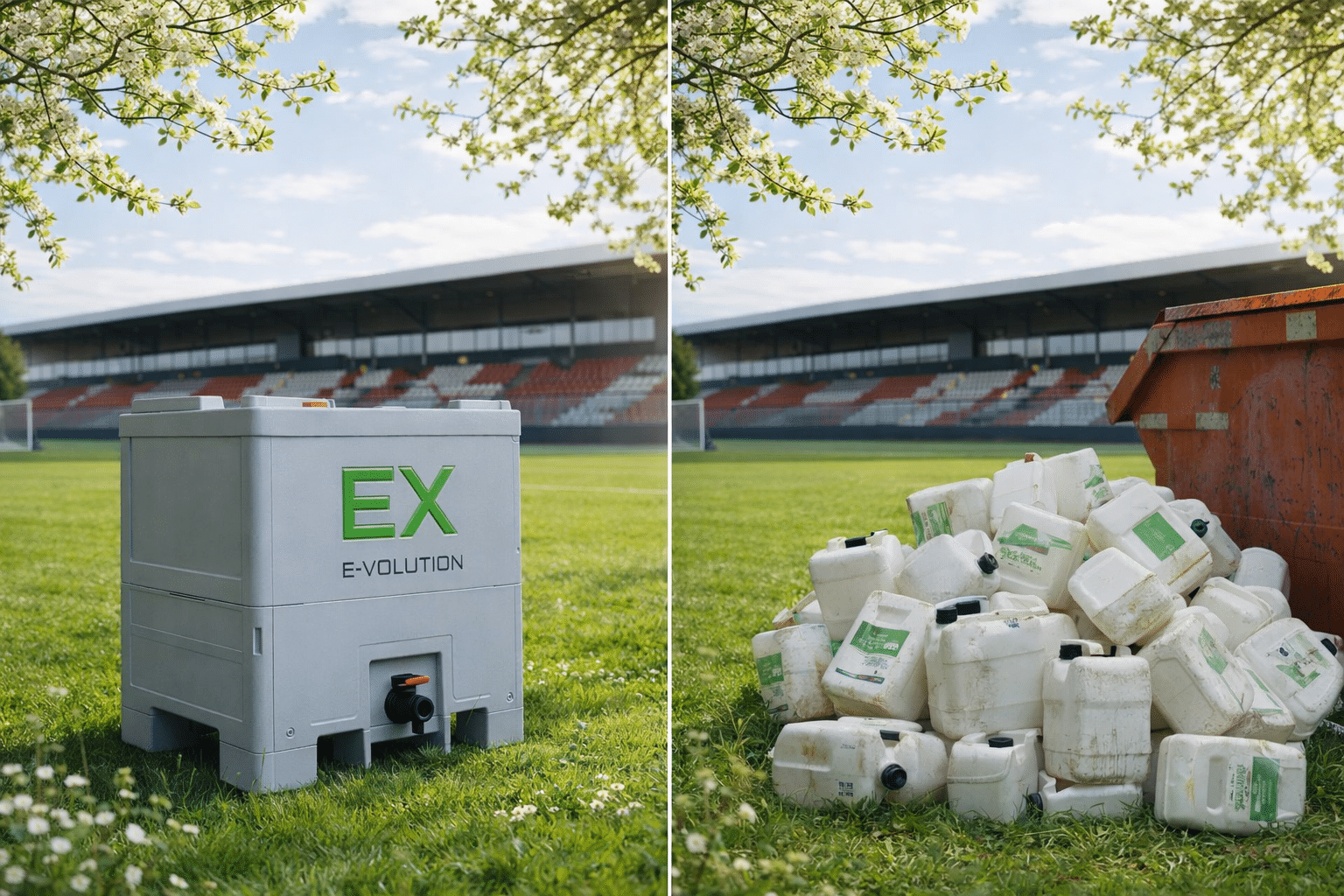
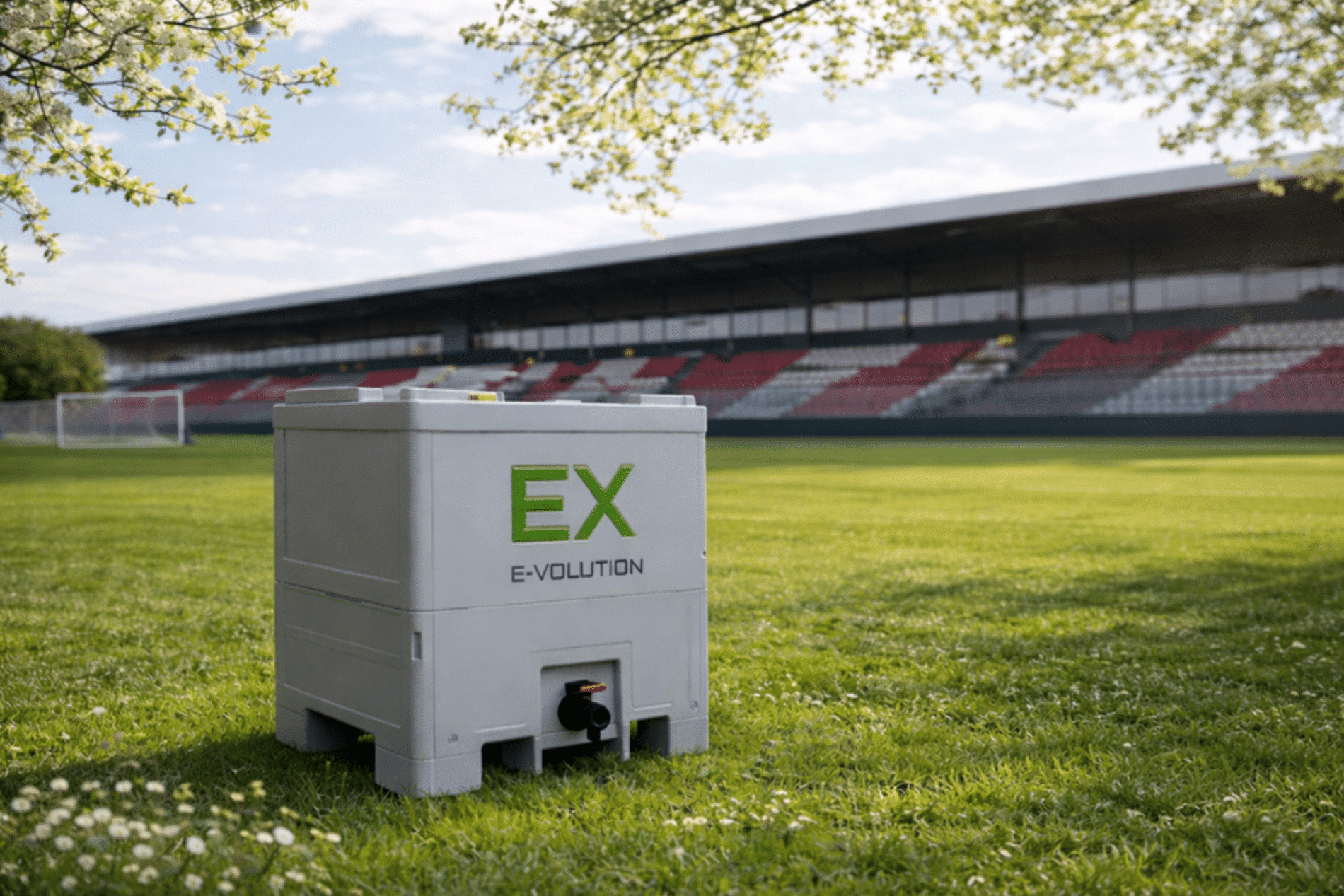
With the introduction of a bag-in-box packaging,
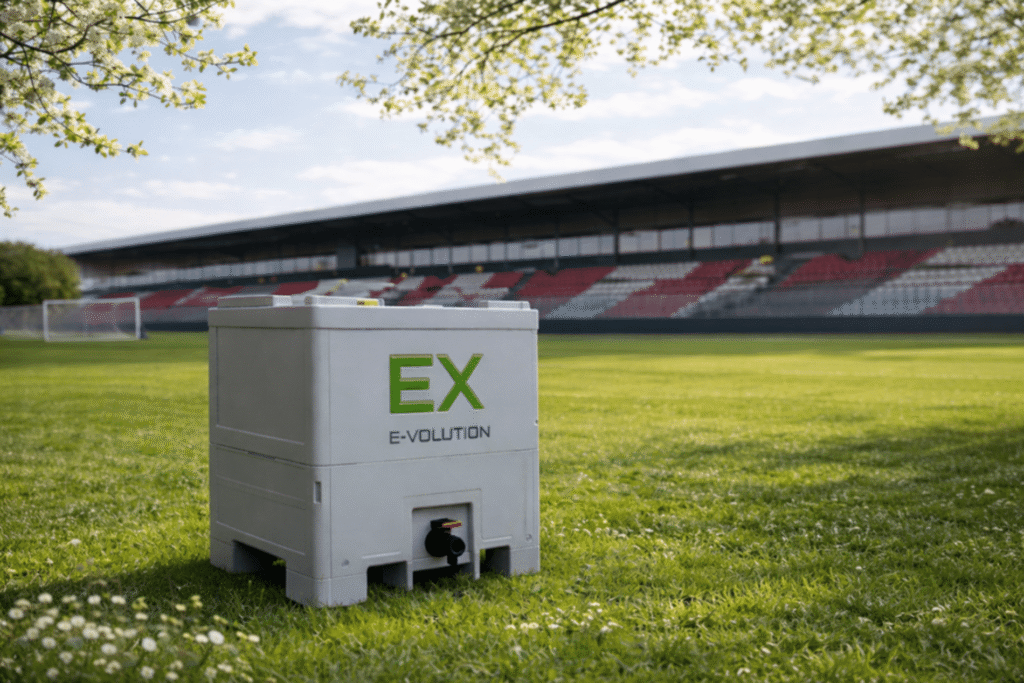
Expo-Line is now taking it a step further. “Think of a wine box, but on a 250-litre scale,” says Bogaerts. “Each barrel replaces twenty-five jerrycans on the market. This only works with a stable product like ours, because you obviously can’t shake such a large container. So it all starts with the coating.” Paint that doesn’t settle is also easier to apply. Spray nozzles don’t get blocked, which is another big advantage when using line-marking robots.
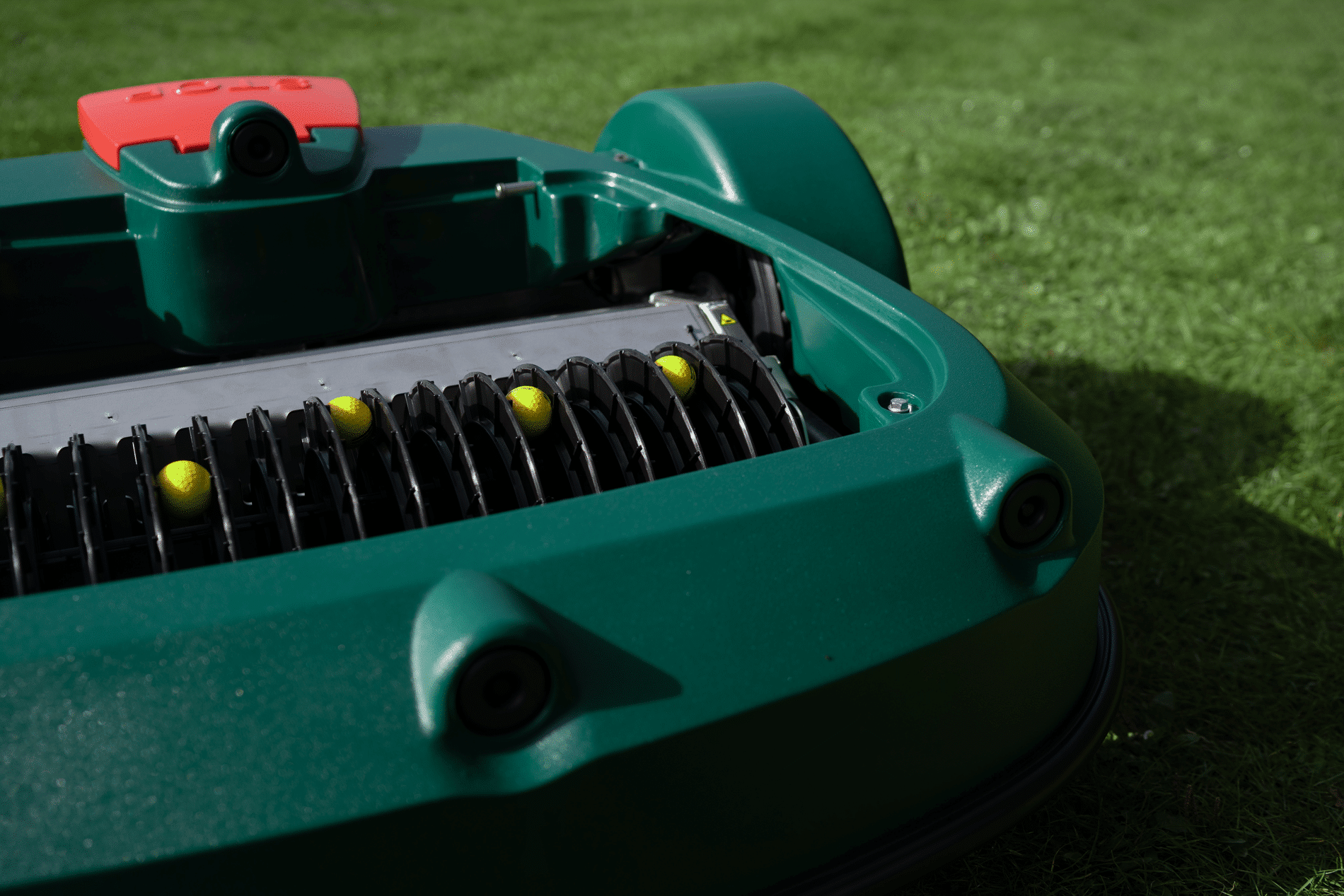
“How autonomous can such a robot really be if you have to intervene every time its spray nozzle gets blocked? We’ve reduced the robots’ consumption from twenty-two litres to five litres per field. Less product, less packaging, less transport and fewer interventions for smooth application: that’s an advantage at every stage of the supply chain.”
This summer, Expo-Line is launching twenty pilot projects across Belgium, including collaborations with VC Westerlo and OHL Leuven. Discussions are also underway in France to roll out the bag-in-box system in a controlled manner. “Line marking might seem like a small part of the football ecosystem. But by improving product efficiency and reducing packaging, we can create a significant impact,” says Bogaerts. “Ten years ago, hardly anyone paid attention to this except us. Today, it aligns perfectly with the sustainability ambitions of clubs and organisations across Belgium and beyond.”