keepitgreen.be
en

Platform for the management and construction of sports and golf courses
How modern grounds management is evolving from craftsmanship to data, technology and elite sports performance
At Ipswich Town FC, success is not measured solely in goals, points or promotions. Beneath every pass, sprint and tackle lies a crucial performance factor: the pitch. And that is where Ben Connell comes in.
Connell has been with Ipswich Town for fifteen years and has witnessed the role of a grounds manager change fundamentally. Where his days once revolved around mowing, line marking, fertilising and irrigating, his focus is now much more on strategy, planning, data and long-term development. “In the early days, I was out on the pitch with tools in my hands. Today, I spend far more time on strategic planning, pitch development and data analysis,” he explains.
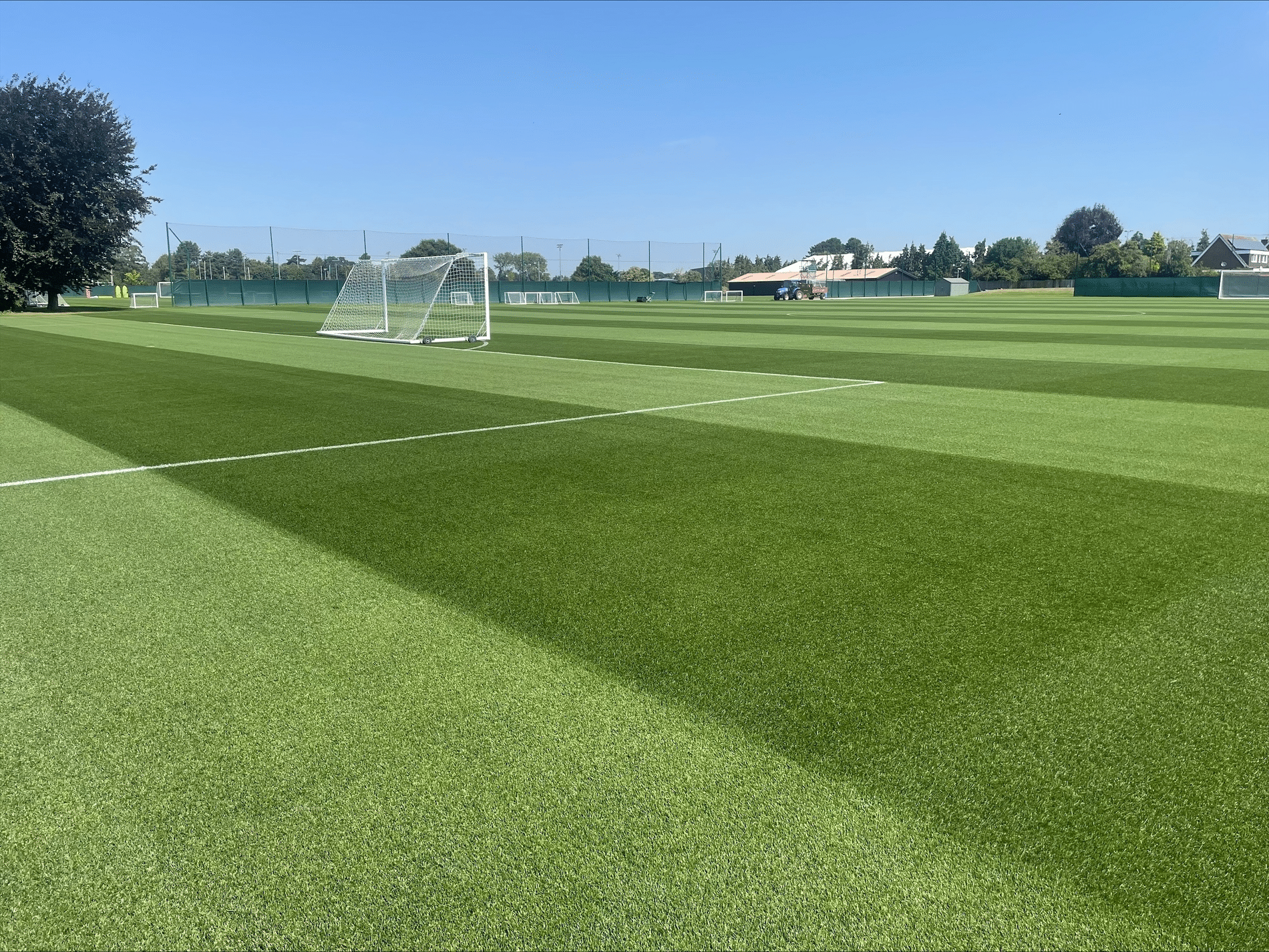
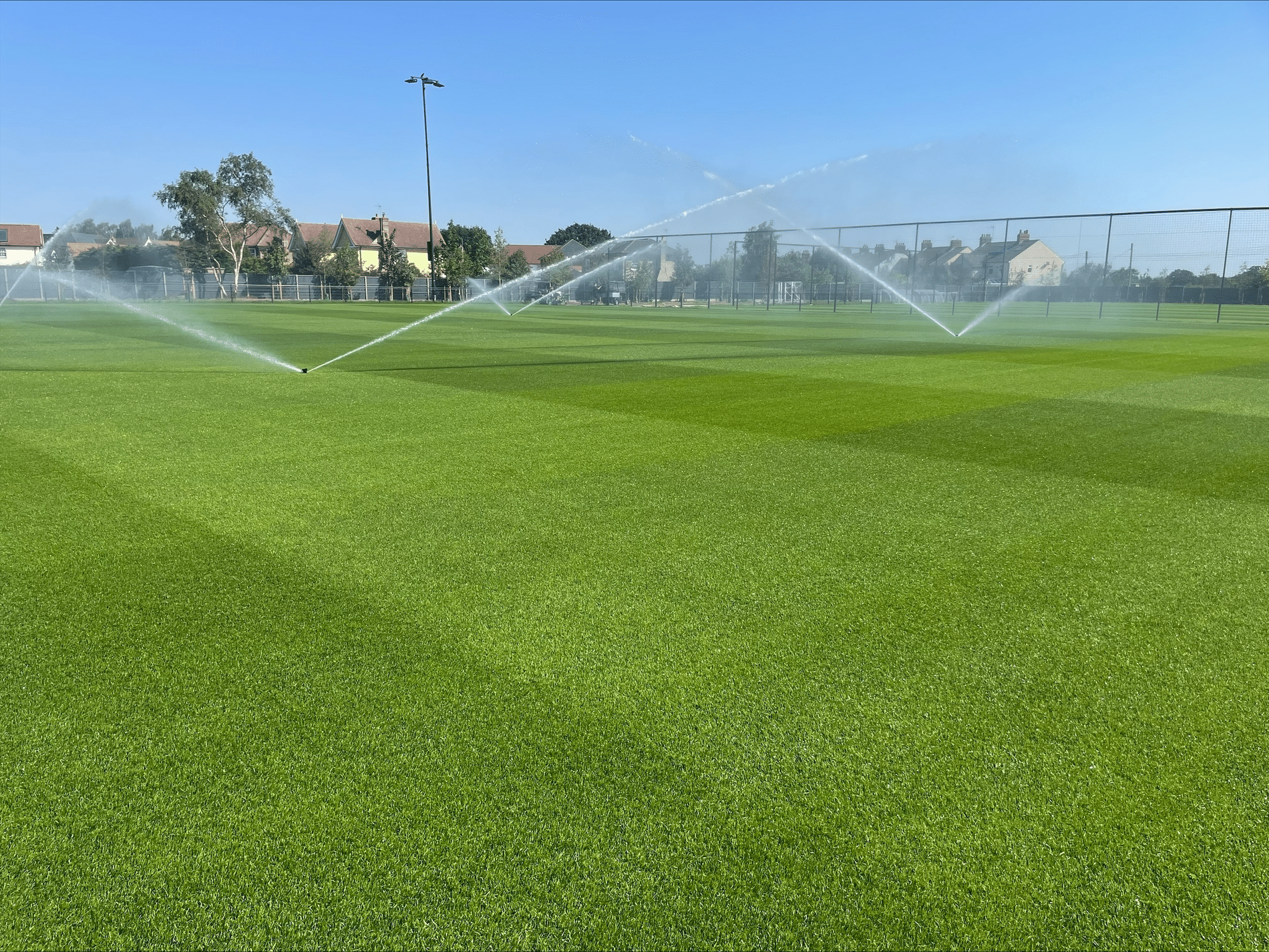
That evolution is also clearly visible across Ipswich’s facilities. Since 2022, the club has invested heavily in new pitches both at the training ground and in the stadium. Older natural grass pitches without drainage or fixed irrigation systems have been replaced by sand-based constructions, reinforced profiles, effective drainage and fully integrated pop-up irrigation systems. “We’ve evolved from travelling sprinklers to complete pop-up systems, reinforced pitches and top-quality constructions,” says Connell. The club is currently working on pitch eight out of ten as part of a wider redevelopment programme.
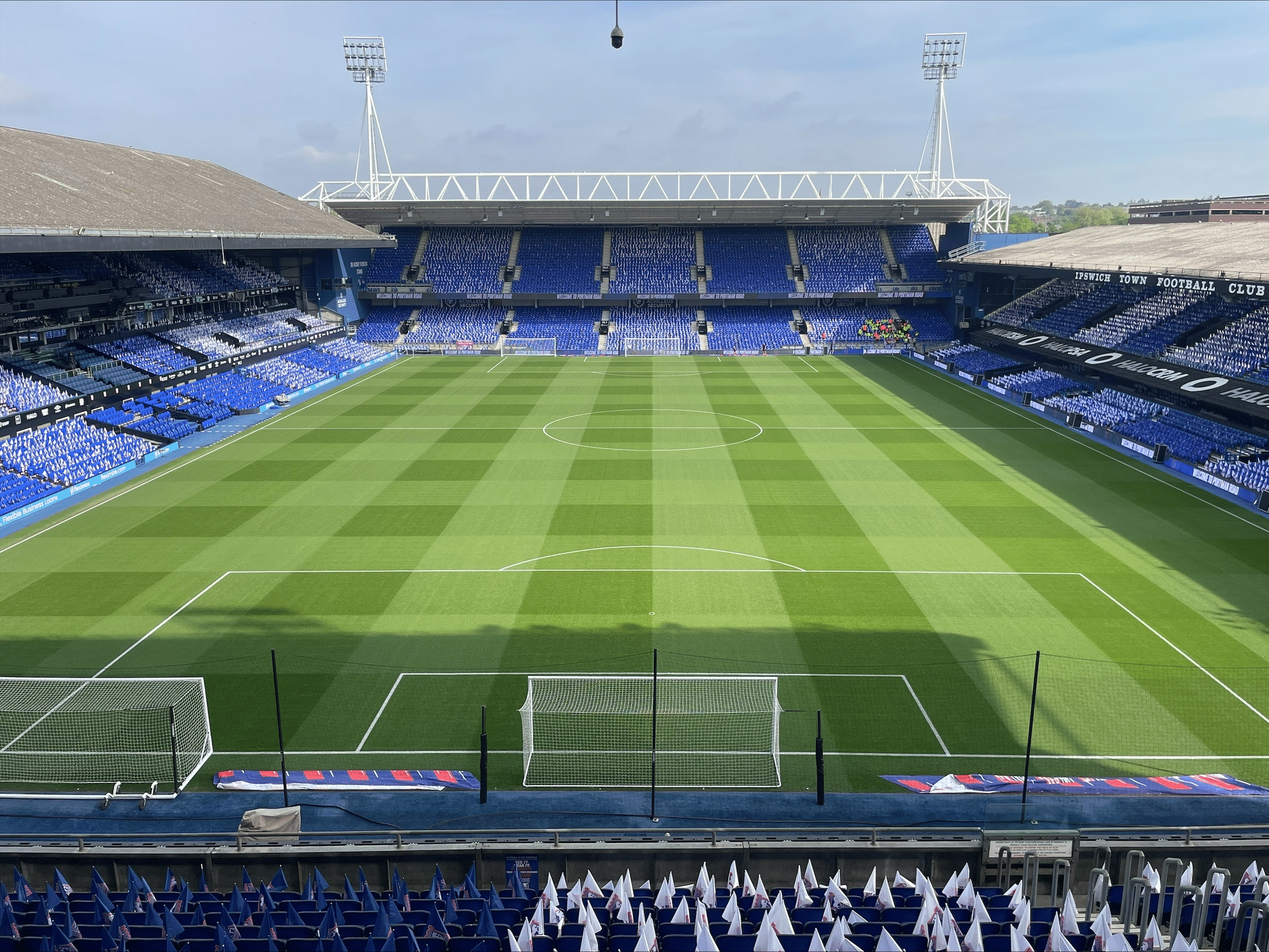
These investments are far from a luxury. In modern professional football, a perfect playing surface throughout the year has become the standard. This is particularly true at Portman Road, which Connell describes as one of the most shaded stadiums in the country. Grow lights, undersoil heating and intensive monitoring are therefore no longer optional extras, but essential tools.
An ambitious football team like Ipswich always prefers to play on a fast pitch. That has direct consequences for the work of Connell and his team. On matchdays, the grass is generally cut at 22 millimetres, and sometimes even down to 20 millimetres. The pitch is also irrigated intensively to maintain a high ball speed. “The manager expects a fast pitch,” says Connell. “We are constantly looking at how we can maintain that pace for as long as possible, right up until half-time when we can irrigate again.”
The medical and performance departments are also paying increasing attention to the playing surface. Before matches, data on factors such as surface hardness and traction is shared. This provides a clearer understanding of the impact the pitch can have on fatigue levels, speed and injury risk.

According to Connell, elite-level pitch management is ultimately not about what is visible above ground, but about what happens beneath the turf. “If we manage the soil properly, the grass generally takes care of itself,” he says. For Ipswich, that means a constant focus on moisture balance, nutrient management, timing of applications and soil health. The quality of a pitch is determined not only by mowing or irrigation, but above all by the condition of the underlying construction and rootzone.
That focus on soil management requires precision. “Elite-level pitches are created by carrying out the right operations at the right time,” Connell explains. Sometimes that also means working outside traditional hours when weather conditions are more favourable for certain applications.
Despite all the technological developments, Connell does not believe technology will replace craftsmanship. On the contrary. In his view, the best results come from combining data with experience. “You need to be in tune with the grass,” he says. “Data is important, but you also need common sense. By looking at the weather and the condition of the pitch, you can often spot problems before they become visible.” Perhaps that is the essence of modern grounds management: measure everything you can measure, but continue to observe, feel and interpret.
The challenges continue to grow. Milder, wetter winters and warmer summers are changing the way pitches are managed. At the same time, pressure on water use, fertiliser applications and energy consumption is increasing. “We know restrictions on water use and synthetic fertilisers are coming,” says Connell. “But at the same time, we are expected to ensure matches are never postponed. There is simply too much money involved in modern football.” Sustainability is therefore not a separate topic, but a daily balancing act between environmental pressures and sporting certainty.
Behind the rivalry of professional football lies a sector where knowledge sharing is almost second nature. Connell explains that grounds managers regularly exchange information on machinery, techniques, irrigation and pitch construction. “We’re constantly talking to each other,” he says. “Ultimately, we all want top-quality pitches. That benefits the players, the clubs and the industry as a whole.”
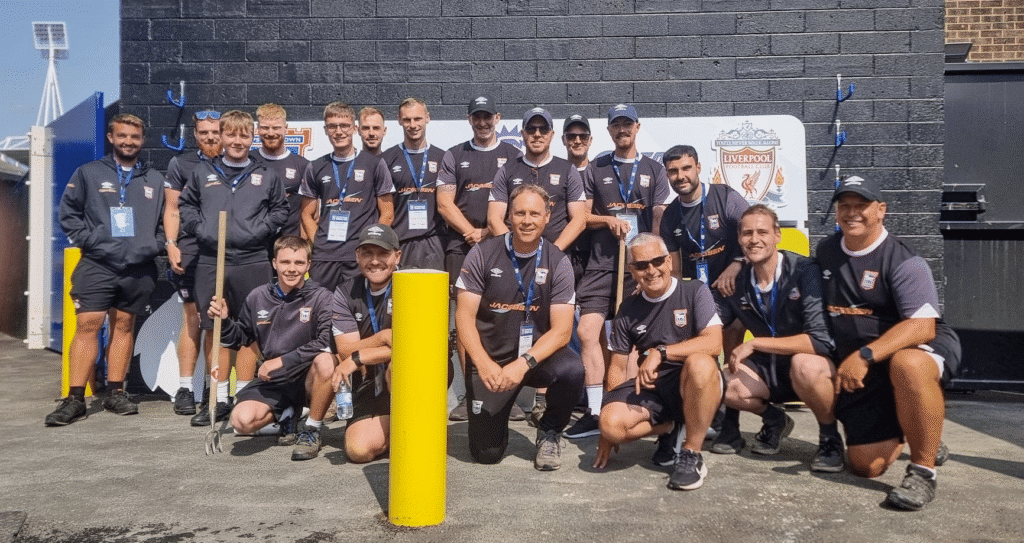
Today, Connell leads a team of sixteen people responsible for ten full-size pitches and several smaller training areas at Ipswich. Apprenticeships also play an important role in attracting and retaining young people within the profession.
Connell expects the profession to change significantly again over the next decade. Greater use of robotics, automated data collection and AI-driven analysis will become increasingly common. “It will be able to tell us much more precisely which nutrients a pitch needs,” he predicts. “But I hope the skills of the grounds person never become diluted.”
Despite all the technology, grounds management remains very much a people-centred profession. His biggest nightmare on matchday? A sprinkler system suddenly activating during the game. It may sound trivial, but it perfectly reflects the reality of elite turf management: everything comes down to the details.
“The turf industry is a unique world,” Connell concludes. “We should probably do a better job of showing people what really goes on behind the scenes.”